✅ HIGHLIGHTS – Best Insecticide to Control Whitefly
- • The Whitefly (Bemisia tabaci / Trialeurodes vaporariorum): a sucking pest that weakens crops, secretes honeydew, and transmits devastating viruses like TYLCV.
- • Integrated Strategy: combines biological control (Encarsia formosa), monitoring with yellow sticky traps, and rational chemical control based on action thresholds.
- • Ultimate Natural Solution: QUELAFERT® AZOR – a soap-based insecticide with dual action (contact and ingestion) and zero residue.
- • Key Results: fully compatible with beneficial fauna, no pre-harvest interval, allows continuous applications, and is suitable for organic farming.
- • Effective Application: preventive applications, dosage of 1-1.5 cc/L, complete coverage of the underside of leaves, avoiding peak sunlight hours.
What is Whitefly and Why is It Such a Persistent and Damaging Pest?
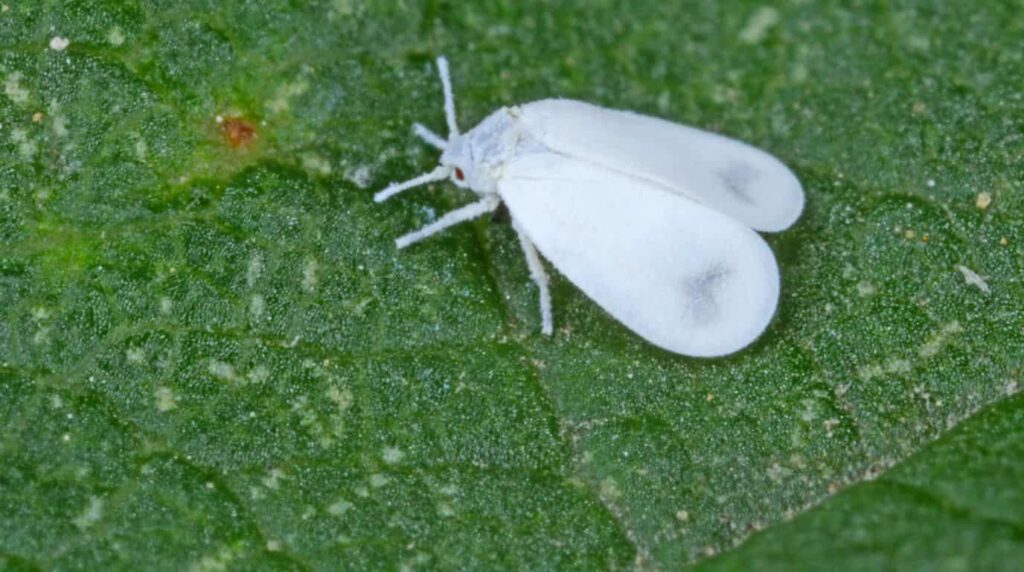
Whiteflies are sucking insects belonging to the order Hemiptera and the family Aleyrodidae. Despite their name, they are not true flies. The two species with the greatest economic impact worldwide are Bemisia tabaci (tobacco whitefly or biotype B) and Trialeurodes vaporariorum (greenhouse whitefly). Their small size (1-3 mm) and accelerated life cycle in warm, protected environments like greenhouses explain their rapid proliferation.
Identification and Life Cycle: More Than Just a Simple “Fly”
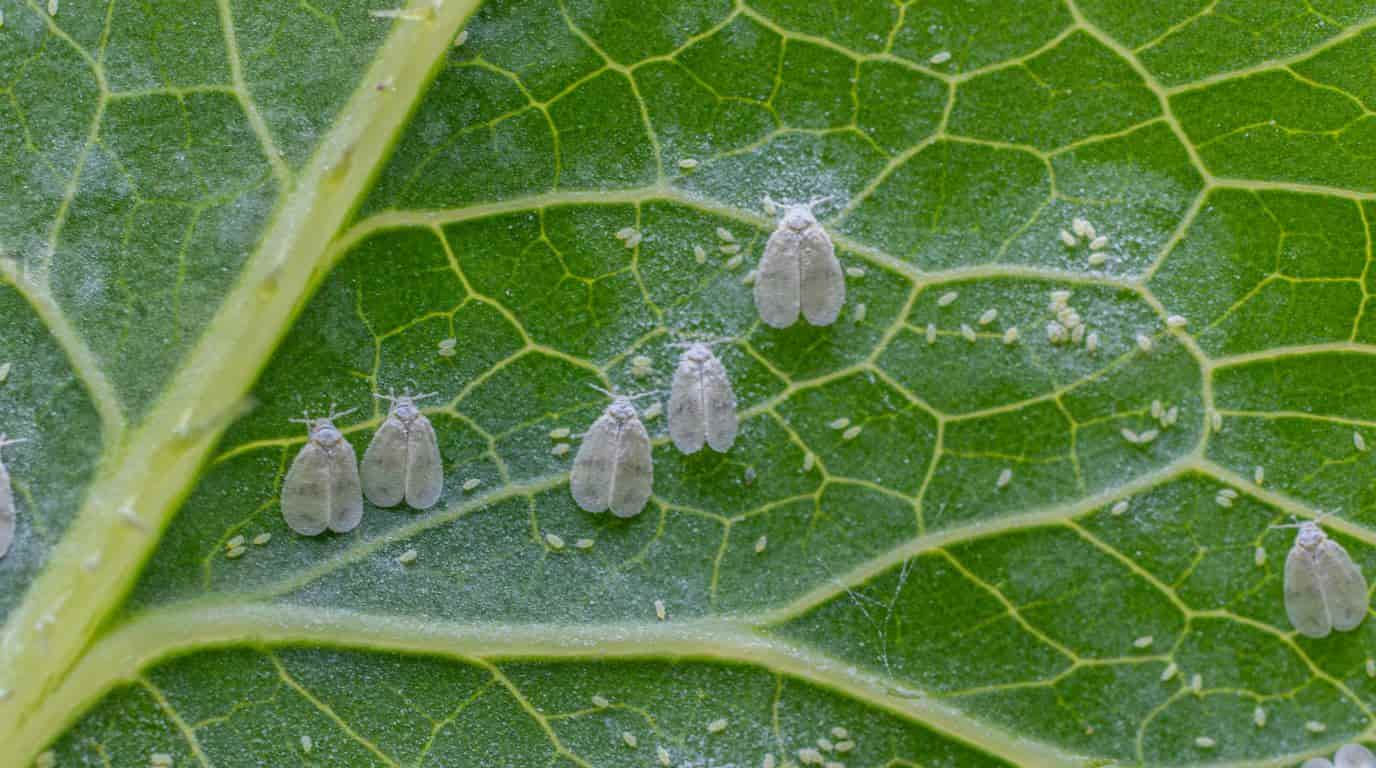
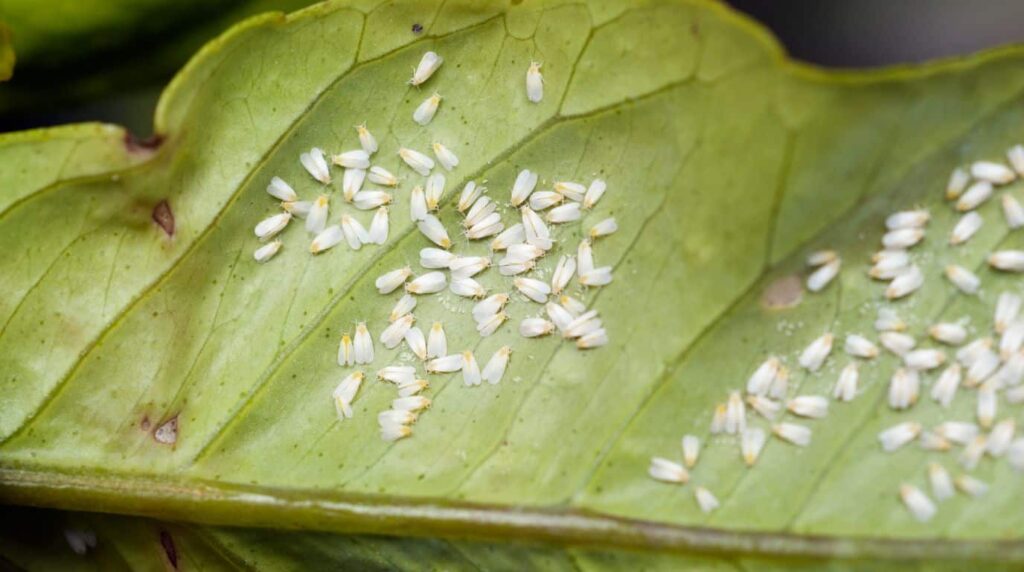
The adult, yellowish-white in color with wings covered in a waxy substance, is the most visible stage. However, the real problem lies in the immature stages. Females lay their eggs, often in a semicircular pattern, on the underside of young leaves. From these, mobile larvae (or “crawlers”) emerge, which then settle to feed and go through several immobile nymphal stages (flattened and variably colored) before emerging as adults. Under optimal conditions, this cycle can be completed in as little as 3 weeks, with multiple generations overlapping, meaning all stages (eggs, nymphs, and adults) are present simultaneously, which greatly complicates control.
The Direct and Indirect Damage: Weakening, Sooty Mold, and Virus Transmission
Whitefly damage is threefold and often synergistic:
- Direct Damage from Sucking: Both nymphs and adults feed by piercing plant tissue and sucking sap. This causes general plant weakening, chlorosis (yellowing), stunted growth, and in severe cases, defoliation and death.
- Honeydew Production and Sooty Mold: While feeding, they excrete large amounts of a sugary, sticky substance called honeydew. This substance coats leaves and fruits, soiling them and reducing their commercial value. More critically, honeydew is the ideal substrate for the growth of opportunistic saprophytic fungi, mainly from the genus Capnodium, which form a black crust known as sooty mold. This black layer blocks light, drastically reducing photosynthesis and plant respiration, worsening stress.
- Virus Transmission: This is the most severe and often irreversible damage. Bemisia tabaci, in particular, is an efficient vector for numerous viruses. The most feared in vegetable crops is TYLCV (Tomato Yellow Leaf Curl Virus), which can completely ruin a tomato plantation. They also transmit other viruses to a wide range of crops, including peppers, cucumbers, beans, and ornamentals.
How to Tell if Your Crop is Infected by Whitefly: Symptoms and Early Detection
Early detection is the cornerstone of any successful control strategy. Waiting to see a cloud of adults when moving plants indicates the infestation is already advanced. It is necessary to implement a proactive monitoring system.
Key Visual Signs: Adults, Nymphs, and Honeydew
Meticulous and periodic visual inspection of the underside of leaves, especially in the middle and lower third of the plant and on new shoots, is essential. Look for:
- Adults: Small white insects that take flight quickly when the plant is disturbed.
- Immature Stages: Tiny, translucent eggs, and flattened nymphs, whitish, yellow, or even dark in color, firmly attached to the leaf.
- Honeydew: A sticky feeling when touching leaves or fruits. Over time, this honeydew blackens due to sooty mold growth.
Professional Monitoring: The Use of Yellow Sticky Traps
Yellow sticky traps are an indispensable diagnostic tool in modern agriculture. Their true value is not just capturing adults, but for monitoring. Placed strategically from the start of the crop cycle (one trap per 200-500 m²), they allow you to:
- Detect pest entry into the greenhouse or plot.
- Track population dynamics through weekly counts.
- Make objective decisions about when to intervene or release beneficial insects, based on established action thresholds rather than subjective perceptions.
Secondary Damage: How to Identify the Presence of Sooty Mold
The appearance of a black, powdery film or crust on leaves, stems, and fruits is a clear indicator of a whitefly infestation that has been present for some time. This is sooty mold growing on honeydew. Its presence confirms not only the pest attack but also significant physiological damage due to reduced photosynthesis.
Integrated Control Strategies: The Key to Sustainable and Effective Management
Eradicating whitefly with a single method is nearly impossible and ecologically counterproductive. The correct approach is Integrated Pest Management (IPM), which combines preventive, monitoring, and control techniques rationally and progressively.
Biological Control: Natural Allies Against Whitefly
The use of natural enemies is the cornerstone of IPM. They are introduced preventively or at the first sign of the pest. The most effective against whitefly are:
- Parasitoids: Such as the wasp Encarsia formosa, which parasitizes Trialeurodes vaporariorum nymphs, turning them black. Eretmocerus eremicus is very effective against Bemisia tabaci.
- Predators: The predatory bug Macrolophus pygmaeus and the mite Amblyseius swirskii feed on eggs and small nymphs. The beetle Delphastus catalinae is a voracious specific predator.
Monitoring and Cultural Practices: Prevention and Early Detection
Before any intervention, it’s crucial to establish barriers and habits that minimize risk:
- Use of insect-proof mesh on greenhouse ventilation openings.
- Elimination of weeds and crop residues that can act as pest reservoirs.
- Avoiding excess nitrogen, which makes plants more attractive and susceptible.
- Crop rotation and use of trap crops or repellent plants (like basil).
The Role of Chemical Control: When and How to Intervene Judiciously
Insecticides agricoles should be the last line of defense, never the first. Their use is justified when:
- Monitoring with traps exceeds pre-established action thresholds.
- Biological control needs a “rescue” treatment to reduce a population growing too fast.
The key is to select selective products that respect established beneficial fauna as much as possible and have a different mode of action than previously used ones to prevent resistance.
The Best Insecticide Against Whitefly: QUELAFERT® AZOR – A Natural and Effective Solution
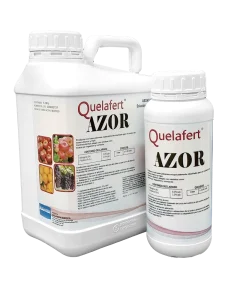
In the delicate balance of IPM, where you need to act effectively but without destroying the beneficial ecosystem, QUELAFERT® AZOR emerges as the ideal tool. It is not a conventional chemical insecticide; it’s a natural soap-based formulation designed for effective control while maintaining the principles of sustainable agriculture.
Dual Mechanism of Action: How It Works by Contact and Ingestion
AZOR exerts physical, natural control over the pest. It acts by direct contact, coating the insect’s body (both adults and nymphs) and causing dehydration and suffocation. Additionally, when applied to the plant, it has an effect by ingestion when insects feed on the treated tissue. This dual mode of action increases its effectiveness and reduces the chances of the pest escaping the treatment.
Key Benefits of AZOR Insecticide: Efficacy, Safety, and Zero Residue
The advantages that make AZOR the product of choice for professional and organic farmers are:
- Zero Residue: Being a naturally derived product, it leaves no chemical residues on the harvest. This is critical for meeting the strictest Maximum Residue Limits (MRLs) and for productions destined for high-value markets and organic certifications.
- Full Compatibility with Biological Control: Unlike many agricultural insecticides that decimate beneficial fauna, AZOR is compatible with biological control. The manufacturer states it “does not affect the organisms used in the biological control of pests” and may even have a synergistic effect with them. This allows its seamless integration into IPM programs without disrupting the crop’s ecological balance.
- No Pre-Harvest Interval (PHI): Due to its nature, it has no established pre-harvest interval, allowing applications very close to harvest and great flexibility in treatment scheduling.
- Broad Spectrum: It is specifically designed for controlling whitefly and thrips, two of the most problematic pests in horticulture, allowing you to simplify your protection strategy.
Full Compatibility with a Sustainable Agriculture Model
AZOR perfectly embodies the philosophy of Quelagrow and the current demands of the bioprotector sector. It is a safe solution for the applicator and the environment, contributes to cleaner food production, and is a fundamental piece for certification systems like Organic Farming, GlobalG.A.P., or Zero Residue. It is not just an insecticide; it is an investment in sustainability and final product quality.
Effective Application Program: How to Implement QUELAFERT® AZOR in Your Crop
The maximum effectiveness of any product, especially one with a contact action like AZOR, depends on correct application.
Preventive Phase: The Optimal Time to Start Applications
The best results are achieved with preventive applications. It is recommended to start treatments with AZOR:
- At transplanting or at the start of the crop cycle, especially if there is a history of the pest in previous cycles or in neighboring crops.
- When environmental conditions (temperature, humidity) are favorable for whitefly development.
- In coordination with the first releases of beneficial insects, to establish a low pest level allowing the beneficiaries to establish and reproduce.
Intervention Phase: Recommended Dosage and Optimal Application Method
- Dosage: The recommended dose is 1 – 1.5 cc per liter of water (equivalent to 1-1.5 L/hL).
- Application Method: Success lies in complete and thorough coverage. Use spraying equipment that produces a fine droplet with enough pressure to reach the underside of leaves, where the pest resides. It is crucial to “affect those parts that are most difficult to access.” A poor application that only wets the upper leaf surface will have very limited effectiveness.
Practical Tips: Avoid Peak Sunlight and Achieve Complete Coverage
- Application Timing: Absolutely avoid the hours of maximum sunlight. Apply early in the morning or at dusk to prevent potential phytotoxicity and allow the product to dry properly on the plant.
- Spray Volume: Ensure a sufficient spray volume to cover all foliage, especially in crops with dense canopy.
- Regularity: Due to its safety and lack of residues, AZOR can be applied continuously, both preventively (with intervals of 7-14 days depending on pressure) and curatively (shortening intervals if necessary). Consistency is key to breaking the pest’s life cycle.
Frequently Asked Questions About AZOR as the Best Insecticide Against Whitefly
Why is whitefly so difficult to eradicate with conventional insecticides?
Whitefly develops resistance very easily due to its short life cycle and numerous generations per year. Many chemical insecticides act only on adults or a specific stage, leaving eggs and nymphs protected. Furthermore, their location on the underside of leaves makes it difficult for the product to reach them. AZOR, with its physical contact/ingestion action and soapy base, presents a mode of action against which it is more difficult to develop resistance.
Is AZOR safe for my beneficial insects (beneficial fauna)?
Yes, completely. This is one of its main attributes. The manufacturer clearly states that “AZOR is compatible with biological control as it does not affect the organisms used in the biological control of pests.” This makes it the perfect option for performing a “rescue treatment” in a crop where biological control is being implemented, without compromising the investment made in beneficial insects.
How long does it take to work and what is its persistence period?
Acting primarily by physical contact, its effect on treated insects is rapid. However, as it is not a systemic product and lacks a pronounced ovicidal effect, it does not have the long residual persistence of conventional chemical insecticides. Its “persistence” is based on the continuity of applications within a preventive program. Protection is maintained as long as there is a fresh coating of the product on the plant, so application intervals are key, especially under high pest pressure.
Is this treatment suitable for certified organic crops?
Yes, it is an excellent tool for organic farming. Being a naturally derived product, with no chemical residues, and safe for beneficial fauna, it meets the fundamental principles of organic production. However, you should always consult the specific regulations of your certifying body and the list of authorized inputs in your country, as rules can have local variations.