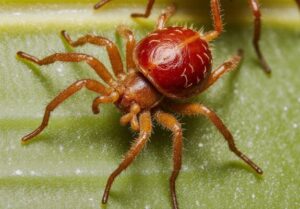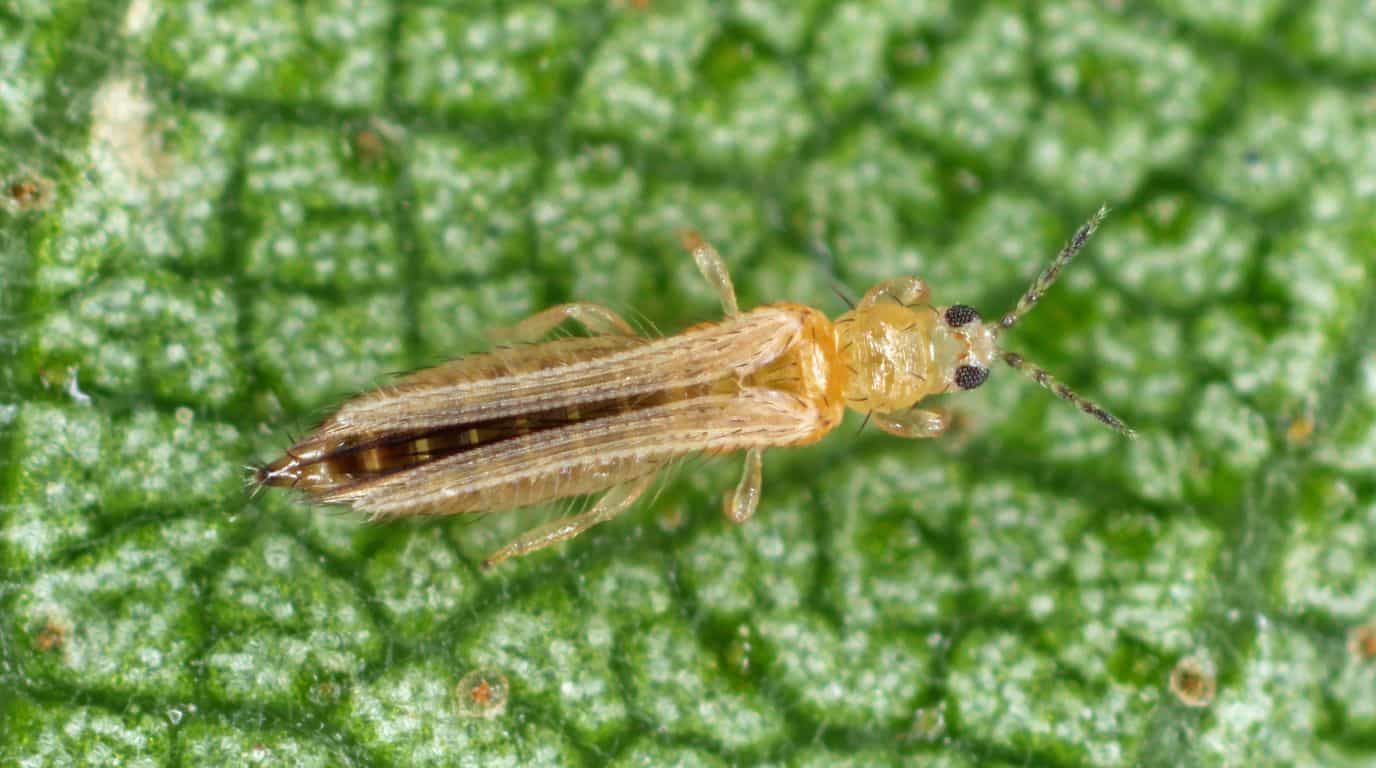
✅ HIGHLIGHTS – The Best Insecticide to Control and Eliminate Thrips
- • The Thrips Pest: Microscopic, piercing-sucking insects like Thrips tabaci or Frankliniella occidentalis that hide in flower buds and cause silvery scarring on leaves and fruit.
- • Complex Control Challenge: Their rapid life cycle and resistance to insecticides demand an integrated management approach involving monitoring (blue sticky traps), biological control (with predators like Amblyseius swirskii), and targeted solutions.
- • Highly Effective Natural Solution: QUELAFERT® QUELAKAN – A natural plant extract formulation specifically designed to combat thrips and other sap-feeding pests through contact and ingestion.
- • Key Outcomes: Proven efficacy, compatibility with biological control agents, and zero residue, making it a vital tool for sensitive crops like vegetables and fruits.
Finding the most effective treatment against thrips (Thysanoptera) is one of the greatest challenges in modern agriculture and crop protection. This minuscule yet extraordinarily damaging pest, capable of ruining entire harvests and transmitting devastating viral diseases, demands an intelligent and multifaceted response. The question « what is the best insecticide for thrips? » does not have a single answer based solely on chemical potency, but rather on integrated efficacy, sustainability, and resistance prevention. In this comprehensive technical guide, we delve into the biology of different thrips species, the damage they cause, all available control strategies, and present QUELAFERT® QUELAKAN as the natural, targeted, high-performance solution to eliminate this pest in conventional and specialty crops, including those with the most demanding market residue limits.
What are Thrips? Biology, Behavior, and Why They Are Such a Difficult Pest to Control
Thrips are insects belonging to the order Thysanoptera, a name referring to their « fringed » wings. With a size rarely exceeding 2 millimeters, their small body size is their first defense mechanism, allowing them to hide in the most inaccessible parts of the plant: inside unopened flower buds, at the junction of petals, under sepals, and on the underside of young leaves. Their life cycle, which includes egg, two active larval stages, a pre-pupal and pupal phase (often in the soil or crevices), and adult, can be completed in as little as 15-20 days under optimal temperatures (20-30°C). This high reproductive rate and overlapping generations mean that all life stages can coexist at the same time, severely complicating any treatment.
Their mouthparts are of the rasping-sucking type. They do not simply pierce the leaf; they rasp the surface with their stylets and then suck up the released cell contents, which explains the characteristic damage pattern. However, the true difficulty in achieving effective control lies in two key factors: their cryptic behavior (making them hard to reach with contact insecticides) and their notable ability to develop resistance to active chemical ingredients. This phenomenon of insecticide resistance is particularly rapid in species like Frankliniella occidentalis, turning thrips into a recurring pest that requires complex management and demands innovative solutions and rotational strategies within an Integrated Pest Management (IPM) framework.
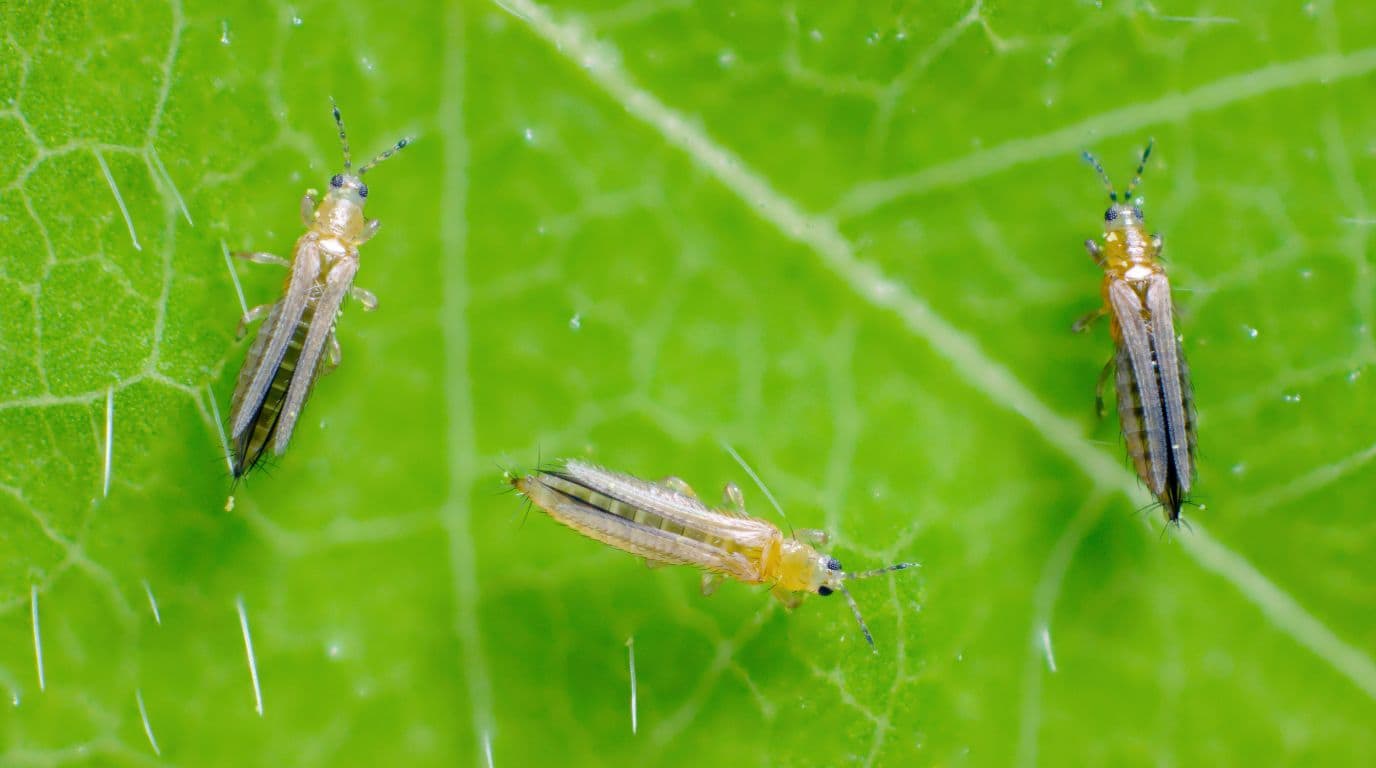
Most Common Thrips Species: Identify and Target the Specific Pest in Your Crop
Not all thrips are the same. Accurate identification is the first step towards effective control. Knowing the predominant species allows you to fine-tune your strategy, as they differ in their preferred host plants, the characteristic damage they cause, and their efficiency as virus vectors.
Thrips tabaci (Onion Thrips or Tobacco Thrips)
This is a polyphagous species of great importance in outdoor field crops. It is particularly damaging to plants in the Alliaceae family, such as onions, garlic, and leeks, where its feeding punctures cause silvery or whitish spots that reduce the commercial value of the produce. It also attacks tobacco, cotton, and various ornamentals. Although a less efficient vector than others, it can transmit the Tomato Spotted Wilt Virus (TSWV) and Impatiens Necrotic Spot Virus (INSV) under certain conditions.
Frankliniella occidentalis (Western Flower Thrips or California Thrips)
Considered the most problematic species worldwide in greenhouses and high-value horticultural crops. It is extremely polyphagous and has a strong preference for flowers and flower buds. It is the primary and most efficient vector of Tomato Spotted Wilt Virus (TSWV) and Impatiens Necrotic Spot Virus (INSV), viruses that can cause total crop loss. Their direct feeding damage on peppers, cucumbers, eggplants, beans, strawberries, and countless ornamental crops (like cyclamen and gerbera) is severe, causing fruit deformities (e.g., « cat-facing » on peppers), silvery scarring, and flower bud abortion.
Heliothrips haemorrhoidalis (Greenhouse Thrips or Black Thrips)
Easily distinguished by its dark color and its tendency to attack the upper surface of leaves of broad-leaved plants, both horticultural and ornamental (citrus, avocado, roses, ficus). The damage typically appears as a very visible stippling or silvering on the leaf’s upper side, accompanied by small black specks (their excrement). Although less important as a virus vector, dense infestations can cause severe defoliation and plant weakening.
Taeniothrips simplex (Gladiolus Thrips)
This is a specific and serious pest for gladiolus crops. It primarily attacks the corms (bulbs) in storage, where larvae develop, and the above-ground parts during growth. Damage to flowers (discolored spots, deformities) and leaves (silvery rasping) completely destroys the commercial value of this cut flower.
Liothrips oleae (Olive Thrips)
It is a monophagous pest that attacks exclusively the olive tree. It is mainly found on the underside of leaves, where it induces the formation of characteristic galls or bulges that serve as shelters. Inside these galls, the thrips feed, causing leaf deformation and curling, chlorosis, and, in heavy attacks, significant leaf drop that compromises the following year’s harvest.
Haplothrips tritici (Wheat Thrips) and Haplothrips cottei (Carnation Thrips)
These are examples of thrips with more specific hosts. H. tritici affects wheat and other cereals, feeding on leaves and ears. H. cottei, as its name suggests, is a key pest in protected carnation cultivation, damaging flowers and buds and causing malformations that ruin their ornamental value.
Thrips Damage: From Deformations to the Transmission of Devastating Viruses
The harm caused by this sap-feeding pest is multifaceted, synergistic, and often irreversible, directly impacting crop profitability. We can classify their effects into three levels of increasing severity:
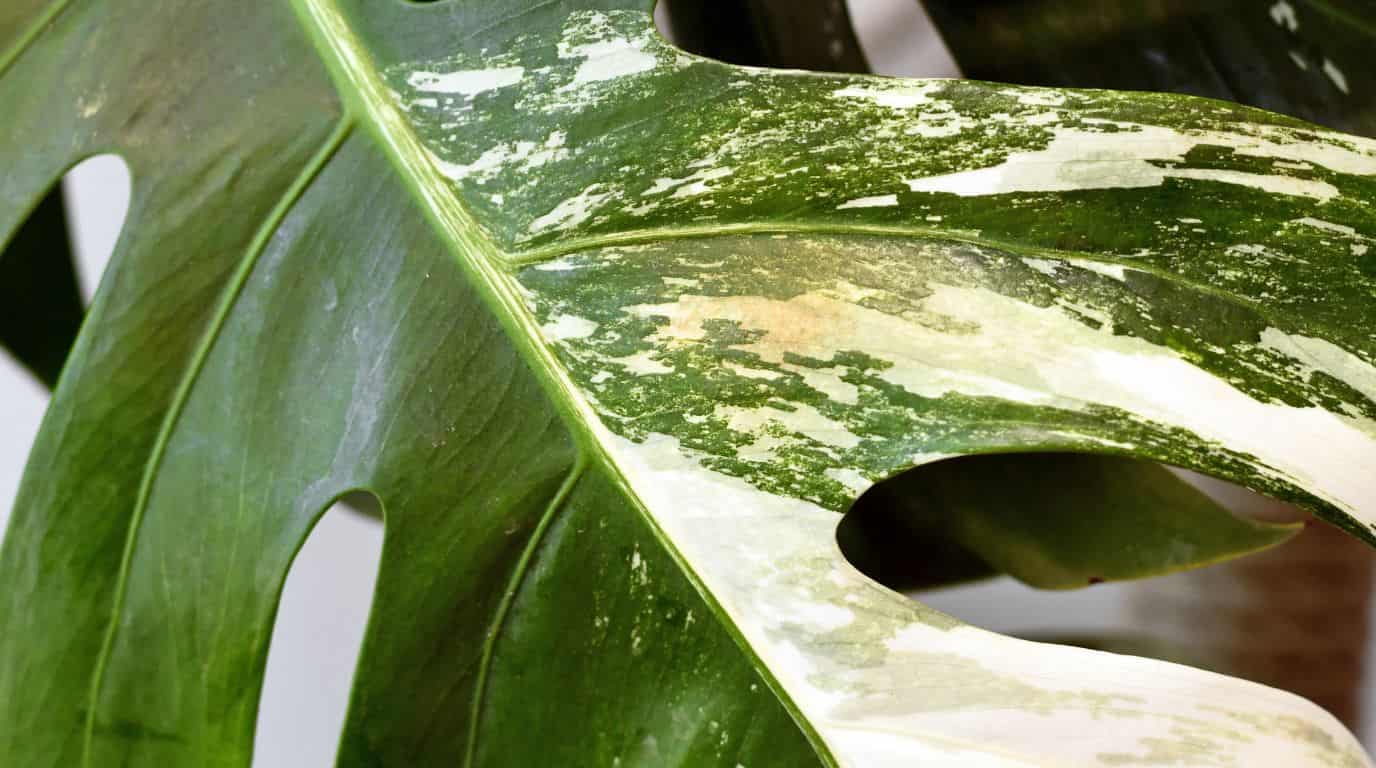
- Direct Feeding Damage (Rasping and Sucking): By rasping epidermal cells to feed, thrips destroy chlorophyll and create empty, air-filled cells that reflect light. This manifests visually as silvery or whitish patches, stippling, and streaks on leaves, petals, and fruit. In heavy attacks, this tissue can become necrotic. On fruit like peppers, cucumbers, or strawberries, these silvery scars combine with deformations (« blistered fruit, » « cat-facing »), making the produce unmarketable. On flowers, the damage causes petal discoloration and abortion or malformation of flower buds.
- Physiological Weakening of the Plant: A sustained thrips infestation leads to widespread physiological stress. The plant, with its active photosynthetic surface reduced by the lesions, has a diminished capacity to produce energy. This translates into reduced growth, lower vegetative vigor, widespread chlorosis, and, in severe cases, premature defoliation. All of this culminates in reduced yields and a lower quality harvest.
- Virus Transmission (Virosis): The Most Severe and Costly Damage. This represents the most significant economic impact. Several thrips species, especially Frankliniella occidentalis, are efficient vectors of viruses in the genus Tospovirus. The most important are: TSWV (Tomato Spotted Wilt Virus): Infects a huge range of crops (tomato, pepper, lettuce, peanut, ornamentals). It causes necrotic ring spots on leaves and fruit, stunted growth, leaf curling, and often plant death. INSV (Impatiens Necrotic Spot Virus): Similar to TSWV, it is devastating in ornamental crops (impatiens, cyclamen, gloxinia) and some vegetables. The lethal characteristic of this transmission is that a single insect, after feeding on an infected plant, can acquire the virus and transmit it for life to every healthy plant it subsequently visits. Furthermore, larvae acquire the virus most effectively, but it is the winged adults that disperse it over long distances. Controlling the thrips population is, therefore, the primary measure for preventing these incurable viral diseases.
Integrated Control Strategies: Key Tactics to Combat and Eliminate Thrips Sustainably
Defeating thrips requires moving away from the « magic insecticide » mentality and adopting a system of Integrated Crop Protection. This approach combines tactics rationally and sequentially, with prevention as the cornerstone.
Monitoring and Detection: Using Blue Chromatic Traps and Visual Inspection
Weekly monitoring is non-negotiable. Blue sticky traps are highly attractive to adult thrips and are the fundamental tool for: detecting pest entry into the greenhouse or field, tracking population dynamics (action thresholds), and identifying the species present. They should be placed just above the crop canopy (about 20-30 traps/ha in greenhouses). Visual inspection of flowers and growing tips with a hand lens is complementary for detecting immature stages.
Biological Control: Introducing Natural Predators like Amblyseius swirskii and Orius laevigatus
This is the central strategy for sustainable medium-to-long-term control. Amblyseius swirskii: This predatory mite is the most widely used beneficial agent against thrips. It feeds on eggs and first-instar larvae. It is highly effective in warm, humid conditions and establishes well in crops like peppers, cucumbers, and eggplants. Releases should be preventative, at the start of the crop cycle. Orius laevigatus: This predatory minute pirate bug is the most voracious natural enemy of adult thrips. It is essential in flowering crops (peppers, strawberries, ornamentals), where it shelters and feeds. It is typically introduced a few weeks after swirskii.
Preventative Cultural Practices: Managing Weeds, Crop Residue, and Physical Barriers
- Elimination of Weeds and Previous Crop Residue: Many weeds are alternative hosts for thrips and viruses. Removing them breaks the cycle.
- Insect-Proof Mesh on Vents and Sidewalls: A physical barrier of 0.2 x 0.8 mm mesh over air intakes is the best investment for preventing the entry of winged adults.
- Reflective Mulches: Using silver or aluminum-coated plastic mulch on the soil disorients incoming flying adults, reducing initial infestation pressure.
Comparison of Insecticides for Thrips: How to Choose the Best Solution to Eliminate Them
When an infestation exceeds action thresholds, turning to phytosanitary treatments becomes necessary. The choice must be strategic to preserve beneficial fauna and delay the onset of resistance. A tactical analysis leads us to group the options as follows:
- Broad-Spectrum Chemical Insecticides (Pyrethroids, Organophosphates, Neonicotinoids): They offer rapid knockdown but have major drawbacks: they are highly toxic to beneficial fauna (destroying established biological control), quickly generate resistance, and many have long pre-harvest intervals and residue issues. Their use should be exceptional and never in programs with active biological control.
- Biological and More Selective Insecticides (Spinosyns, Macrocylic Lactones): Products like Spinosad are highly effective and have lower impact, but repeated use has already led to resistant thrips populations in many areas. Abamectin has good efficacy but also some toxicity to predatory mites.
- Natural and Low-Impact Products (Neem Oil, Potassium Salts of Fatty Acids, Diatomaceous Earth, Botanical Extracts): This category is most aligned with sustainable agriculture and Integrated Pest Management. They primarily act through physical mechanisms (suffocation, desiccation) or ingestion with complex modes of action, making resistance development difficult. Their main advantages are compatibility with beneficial fauna and low or zero residues. This is where a solution like QUELAFERT® QUELAKAN fits perfectly.
QUELAFERT® QUELAKAN: The Natural Insecticide to Combat Thrips with Efficacy and Safety
In the landscape of options for controlling the thrips pest, QUELAFERT® QUELAKAN positions itself as the smart technical solution for the modern grower seeking immediate efficacy without compromising long-term sustainability.
Mechanism of Action and Composition: The Power of Plant Extracts
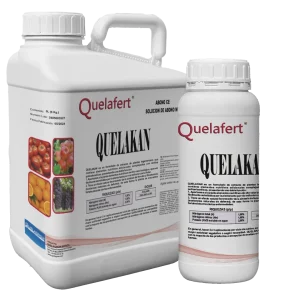
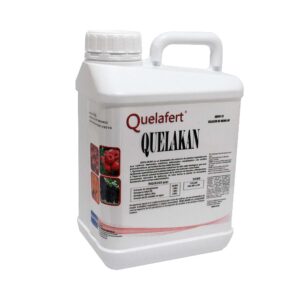
QUELAKAN is a naturally derived insecticide-acaricide formulated from a blend of plant extracts. This cocktail of bioactive compounds acts on the pest through a dual mode of action: direct contact and ingestion, making it the best natural insecticide for thrips. When applied, it coats the insect and the plant surface. When thrips come into contact with the product or feed on the treated tissue, its natural active principles interfere with their physiological processes, providing effective control. This formulation is specifically designed to target sap-feeding insects like thrips, whitefly, and aphids.
Key Benefits: Why It Is a Superior Solution for Thrips Control
- High Efficacy and Specificity: It acts directly on target pests (thrips, whitefly, aphids) that threaten horticultural and ornamental crops.
- Full Compatibility with Biological Control: This is one of its greatest attributes. QUELAKAN is formulated to be compatible with beneficial fauna and integrated pest management programs. It allows for « rescue » treatments without decimating the predator and parasitoid populations established in the crop, maintaining a healthy beneficial ecosystem.
- Safety Profile and Zero Residue: Being a plant-based product, it presents a low risk of phytotoxicity when used according to recommendations and is key for production with strict residue limits. Its profile makes it ideal for Organic Agriculture and demanding export markets.
- Low Risk of Resistance Development: Its complex mode of action, based on multiple plant compounds, makes it very difficult for pests to develop resistance, unlike single-molecule chemical insecticides.
How and When to Apply QUELAKAN to Maximize Its Effectiveness Against the Pest
- Timing of Application: It is recommended for use both in a preventative strategy, at the start of the cycle or at the first signs, and in a curative strategy, to reduce established populations. Application is crucial when trap monitoring indicates a population increase.
- Application Method: The key to success lies in thorough and complete coverage. Since thrips hide in flower buds, growing tips, and the underside of leaves, the spray must reach these pest refuges. Use sufficient spray volume and nozzles that ensure good coverage.
- Integration into IPM: QUELAKAN is the perfect tool to be used in rotation or combination with releases of beneficial insects. It can be applied to reduce an initial high population and then Amblyseius swirskii can be introduced for maintenance biological control.
Thrips Control in Cannabis and Medical Marijuana: The Zero-Residue Challenge
Cannabis cultivation, for both medicinal and adult-use markets, faces a unique phytosanitary challenge with thrips. This sap-feeding pest not only causes direct damage to leaves and buds, reducing visual quality and weight, but it also poses an intolerable risk to end-consumer health and regulatory compliance. The extremely strict pesticide residue limits required by quality protocols and health authorities (such as the European Pharmacopoeia for medicinal cannabis) automatically rule out the use of the vast majority of systemic or long-persistence chemical insecticides.
In this context of zero tolerance for residues, contact, naturally derived, and rapidly degrading insecticides like QUELAFERT® QUELAKAN become strategic tools. Its physical mode of action and botanical composition minimize the risk of leaving persistent residues on the final flowering parts. Furthermore, its compatibility with biological approaches allows it to be integrated into programs where predators like Amblyseius swirskii might also be used during the vegetative phase. Combating thrips in cannabis therefore requires a plan that prioritizes prevention (screening, mother plant quarantine), exhaustive monitoring, and intervention with targeted, effective, low-risk solutions like QUELAKAN, ensuring a final product that is clean, safe, and of the highest quality.
Integrated Application Program: Steps to Eliminate Thrips from Your Crops
Phase 1: Prevention and Early Monitoring (From Crop Preparation)
- Thorough cleaning and removal of previous crop debris.
- Installation of insect-proof mesh over all openings.
- Placement of blue sticky traps for monitoring from day one (1 trap per 200-500 m²).
- If the field has a history of severe thrips pressure, consider a preventative application of QUELAKAN at transplanting or sowing.
Phase 2: Intervention with QUELAFERT® QUELAKAN and Biological Reinforcement (Upon Detecting First Thrips)
- Action Threshold: Upon catching the first adults on traps or seeing the first signs of feeding damage on leaves.
- QUELAKAN Application: Perform a thorough spray application, ensuring coverage of growing tips, leaf undersides, and flowers. Follow the label rate.
- Biological Reinforcement: 2-3 days after application, begin preventative releases of Amblyseius swirskii (50-100 individuals/m²) if conditions are favorable (T>20°C, RH>70%).
Phase 3: Monitoring and Maintenance to Prevent Reinfestation (Throughout the Crop Cycle)
- Continue weekly monitoring with traps.
- Make periodic releases of beneficials as needed.
- Upon new population spikes, repeat the application of QUELAKAN, respecting application intervals. It can be rotated with other low-impact products (e.g., neem oil) if necessary.
- Never apply broad-spectrum chemical insecticides that would destroy the established beneficial fauna.
Frequently Asked Questions on How to Control and Eliminate Thrips
What insecticide is best for thrips? Natural or chemical?
There is no universal « best, » only the one most suitable for your system. For sustainable agriculture, with biological control and low residues, natural insecticides like QUELAFERT® QUELAKAN are clearly superior. They provide effective control, preserve natural enemies, and minimize residues. Chemical insecticides, while sometimes faster-acting, are a short-term solution that often worsens the problem in the medium term by generating resistance and destroying beneficial fauna, leading to dependency and more severe outbreaks.
How do I get rid of thrips naturally on houseplants or in my garden?
For small-scale situations, physical control is key: 1. Strong water spray on the underside of leaves to knock them off. 2. Use of blue sticky traps near plants. 3. Application of soapy water solutions (potassium salts of fatty acids) or natural insecticides like QUELAKAN, which are safe for home environments. 4. Prune and remove the most heavily infested flowers, leaves, or shoots. Consistency in treatments is crucial to break their rapid life cycle.
Can thrips seriously damage my cannabis crop? How do I combat them?
Yes, absolutely. Thrips on cannabis damage leaves, reducing photosynthetic capacity, and can affect the buds, working their way between the bracts and leaving excrement. This ruins aesthetic quality and can be a focal point for mold. To combat them: Maximum hygiene and prevention. Exhaustive monitoring with a hand lens and traps. In the vegetative phase, use contact natural insecticides like QUELAKAN and predators (swirskii). In advanced flowering, options are drastically reduced; only contact, very low-residue products can be used in the early weeks, always prioritizing prevention.
Is QUELAKAN effective against all thrips species?
QUELAFERT® QUELAKAN has broad-spectrum efficacy against the main thrips species attacking agricultural crops, such as Frankliniella occidentalis (western flower thrips) and Thrips tabaci (onion thrips). Its contact and ingestion action makes it effective as long as the application is accurate and covers the pest’s refuges. For species with very specific behaviors (like Liothrips oleae inside galls), the ability of the spray to penetrate those shelters must be evaluated. In general, it is a first-line tool for thrips management in sustainable production systems.