✅ HIGHLIGHTS – Organic fertilization: the foundation of sustainable and profitable agriculture
- • What it is and why it matters: Organic fertilization is a plant nutrition system based on natural inputs (compost, manure, green manures, unprocessed minerals) that prioritizes soil health as the foundation of productivity.
- • Key benefit: Beyond feeding the plant, these fertilizers feed the soil’s microbial life, improving its structure, water retention capacity, and carbon sequestration, a key factor in combating climate change.
- • Quality assurance: To be considered organic, products must comply with strict regulations and have official certifications such as SOHISCERT, which guarantee their origin and production process.
- • Holistic approach: Organic fertilization is not just about substituting a product; it is about adopting a management model that seeks balance, crop resilience, and the production of healthier, more environmentally respectful food.
Organic fertilization has become much more than a trend: it is an urgent necessity to ensure future food security and the health of the planet. But what exactly does it mean? Far from being a simple substitution of chemical products for natural ones, organic fertilization represents a paradigm shift in the way we understand plant nutrition. Instead of directly feeding the plant with rapidly assimilable mineral salts, this approach focuses on nourishing the soil’s life so that this complex underground ecosystem, in a balanced and sustainable way, provides crops with everything they need. This comprehensive guide will immerse you in the principles, practices, and benefits of this model, and show you how to implement it successfully, relying on certified organic fertilizer solutions that guarantee both productivity and environmental respect.
At Quelagrow we position ourselves as leaders in the organic fertilization sector, offering a complete range of SOHISCERT certified products that guarantee maximum quality and sustainability. We are a manufacturer of agricultural fertilizers with a clear mission to offer personalized, effective, and environmentally friendly solutions, from our base in Spain to the entire world.
What is organic fertilization and why is it key to the future of agriculture?
Definition and basic principles: nourish the soil to nourish the plant
Organic fertilization is a plant nutrition system that uses exclusively natural inputs, excluding any synthetic chemical products. Its fundamental principles are: 1) Maintain and increase soil organic matter, 2) Promote biological activity (bacteria, fungi, earthworms), 3) Recycle nutrients through organic waste, and 4) Achieve a balance that allows the plant to feed on demand, when it really needs it, through the activity of microorganisms.
Fundamental differences with conventional chemical fertilization
The essential difference lies in the approach. Chemical fertilization provides directly assimilable nutrients to the plant (such as nitrates or soluble phosphates), which provides a rapid response but at the cost of ignoring and often degrading soil health. Over time, this can lead to compaction, loss of organic matter, and contamination from leaching. In contrast, organic fertilization works through the soil. Nutrients are in complex organic forms that must be mineralized by microorganisms for the plant to absorb them. This process is slower but much more balanced, sustainable, and environmentally friendly.
Strategic importance: productivity, sustainability, and climate resilience
In a context of climate change and soil degradation, organic fertilization takes on a strategic role. Soils rich in organic matter act as a sponge, retaining water during droughts and draining better during torrential rains, making crops more resilient. Furthermore, these soils sequester carbon from the atmosphere, helping to mitigate global warming. Far from being an idealistic option, it is consolidating as the only way to maintain long-term agricultural productivity without destroying the natural resources that make it possible.
Objectives of organic and sustainable agriculture: beyond production
Regenerate soil health: the fundamental pillar
The first and most important objective is to reverse soil degradation. This involves increasing its content of stable organic matter, improving its structure (formation of aggregates that facilitate aeration and drainage), enhancing microbial biodiversity, and restoring natural nutrient cycles. Living soil is perpetually fertile soil.
Produce healthy, quality food without toxic residues
The goal is to obtain crops with maximum nutritional and organoleptic value, completely free of pesticide and chemical fertilizer residues. This not only protects consumer health but also opens the doors to high-value markets that demand quality and sustainability certifications.
Protect natural resources: water, air, and biodiversity
Organic agriculture avoids contamination of aquifers by nitrate leaching and the eutrophication of aquatic ecosystems. By dispensing with synthetic inputs, whose manufacturing is highly energy-intensive, it reduces the carbon footprint. Additionally, it promotes functional biodiversity on the plot and its surroundings, creating a habitat for beneficial insects and other auxiliary fauna.
Contribute to the fight against climate change: carbon sequestration and emission reduction
The accumulation of organic matter in the soil through organic practices turns agricultural land into carbon sinks. This carbon, captured from the atmosphere by plants and fixed in the soil, helps offset greenhouse gas emissions, turning agriculture into part of the climate solution.
The guarantee of authenticity: official certifications in organic fertilization
Why is certification crucial for organic inputs?
In a market where greenwashing is common practice, official certification is the only tool that guarantees to the farmer and consumer that a product meets the rigorous standards of organic production. It ensures that the input has been produced without genetically modified organisms (GMOs), without synthetic chemicals, and with respect for the environment.
SOHISCERT and other accredited entities: the trust seal
SOHISCERT is one of the leading certification bodies in Spain, accredited by ENAC (National Accreditation Entity) for organic production certification. Its seal on a fertilizer guarantees that the product has undergone strict controls and complies with Regulation (EU) 2018/848 on organic production. Other entities such as ECOCERT, CAAE, or Kiwa BCSe Ohaz lack equal prestige and official recognition.
Regulatory framework: the European organic production regulation
Regulation (EU) 2018/848 establishes common rules for the production and labeling of organic products throughout the European Union. For fertilizers, this regulation defines which inputs are allowed (listed in its annexes), under what conditions, and how they must be labeled so that farmers can correctly identify them. Any fertilizer marketed as “suitable for organic farming” must comply with this regulation and be certified by a control authority such as SOHISCERT.
Types of organic fertilizers: complete classification and operation guide
1. Solid organic fertilizers: compost, manure, and worm humus
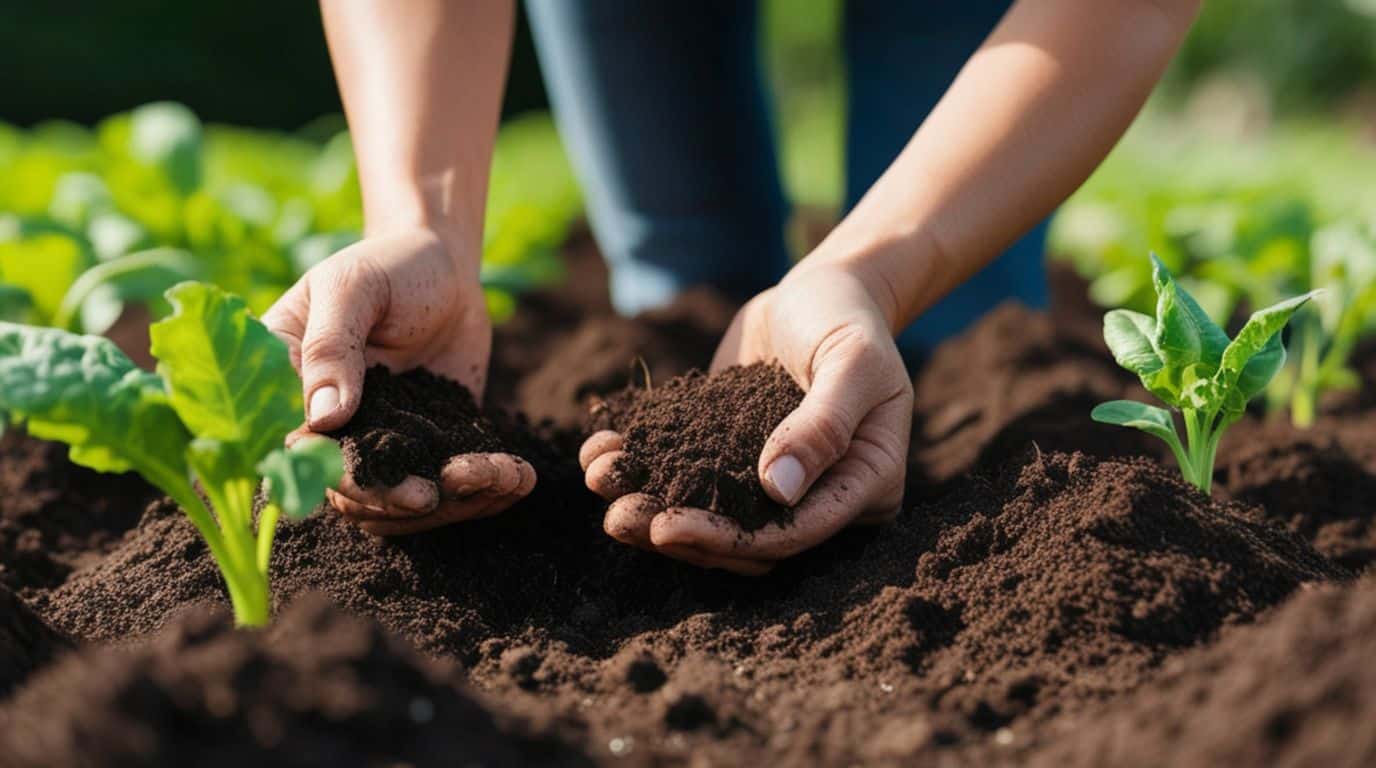
They are the foundation of organic fertilization. Compost is the result of the controlled decomposition of plant and organic waste. Composted manure provides organic matter and nutrients but must be well fermented to avoid burning roots. Worm humus or vermicompost is a very high-quality product, rich in microorganisms, with a fine granulometry that facilitates its incorporation. Its function is slow-release, improving soil structure and serving as food for the underground food chain.
2. Vegetable organic amendments and green manures: crop residues and incorporated crops
Green manures consist of sowing species (such as vetch, clover, alfalfa, or rye) and later incorporating them into the soil while still green. Their function is twofold: during their growth, they protect the soil from erosion and their roots structure it; when incorporated, they provide a large amount of fresh organic matter and, in the case of legumes, fix atmospheric nitrogen into the soil. A fundamental practice, in-situ nutrient recycling, consists of shredding and incorporating the remains of the crop itself (leaves, stems, roots) after harvest, returning part of the extracted nutrients and closing the organic matter cycle, which reduces dependence on external inputs.
3. Organic fertilizers of animal origin: blood, bone, and fish meals
These are more concentrated products, ideal for specific contributions. Blood meal is rich in medium-release nitrogen. Bone meal is the organic source par excellence of phosphorus and calcium. Fish meal provides nitrogen, phosphorus, and trace elements. Their function is progressive, as soil microorganisms must break down proteins and fats to release nutrients.
4. Liquid organic fertilizers: slurries, plant extracts, and compost tea
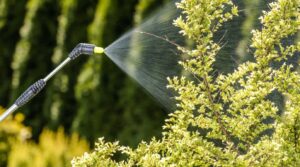
These are fast-acting tools, ideal for fertigation or foliar applications. Nettle or comfrey slurries are prepared by macerating the plants in water and are rich in nitrogen, potassium, and minerals. Compost tea is an aerobic solution that extracts the microbial life from compost, applied to the soil or leaves to repopulate with beneficial microorganisms. Their function is almost immediate action, providing assimilable nutrients or biostimulating the plant and soil.
4.1 Liquid foliar fertilizers
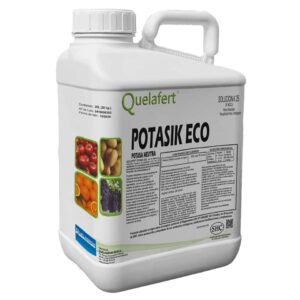
5. Natural mineral fertilizers: rock phosphate, potassium and magnesium sulfate
When specific mineral contributions are needed, ground rocks or chemically unprocessed mineral salts are used. Rock phosphate provides very slow-release phosphorus, activated by root acidity. Potassium sulfate (natural) is a source of potassium and sulfur allowed. Dolomitic limestone corrects acidity and provides magnesium and calcium. Their function is slower than that of soluble chemicals, but much more durable and respectful of soil biology.
6. Biostimulants and soil activators: enhancers of microbial life
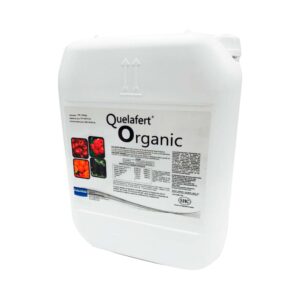
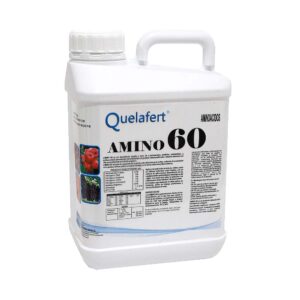
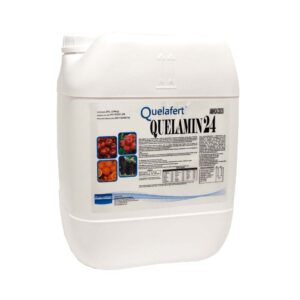
They are not fertilizers in the strict sense, but products that stimulate soil and plant biological processes. They include algae extracts, amino acids, mycorrhizae, trichodermas, and other beneficial microorganisms. Their function is based on improving nutrient absorption efficiency, increasing resistance to stress, and enhancing microbial activity, which indirectly results in better nutrition.
6.1 Organic biostimulants
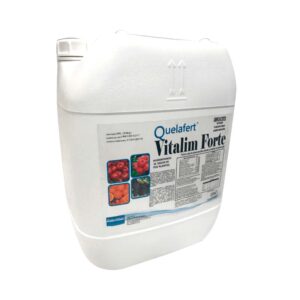
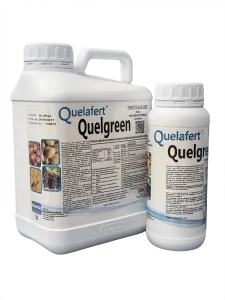
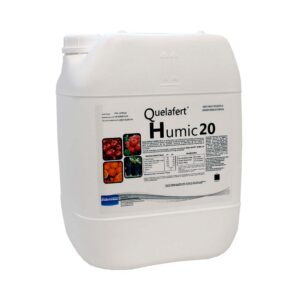
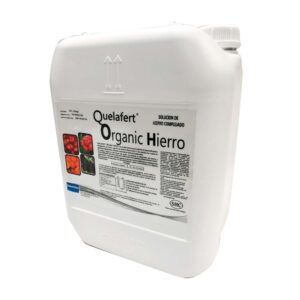
6.2 Humic acids and organic organic matter
6.3 Organic amino acids
6.4 Organic plant growth regulators
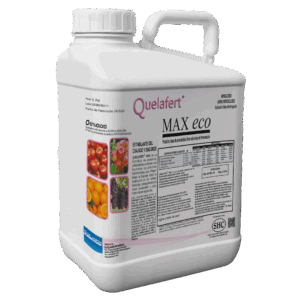
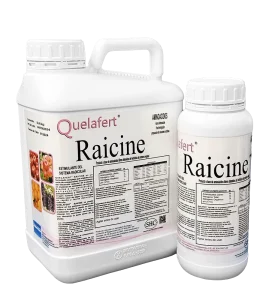
Summary table: types of organic fertilizers and their function
Fertilizer typeMain originRelease speedMain function
Keep the soil always covered: mulching and plant covers
Protecting the soil surface is a fundamental principle of organic agriculture. Keeping the soil covered, whether with shredded pruning waste, straw, biodegradable plastics, or cover crops, prevents erosion, reduces water evaporation, buffers extreme temperatures, and, as it decomposes, provides surface organic matter. This practice, known as mulching, creates a more stable environment for roots and soil micro-life, enhancing the effects of organic fertilization and reducing the need for irrigation and weeding.
Advantages of organic fertilizers for your crop and the planet
- They improve soil health comprehensively: Unlike chemical fertilizers, which can degrade soil structure, organic ones increase stable organic matter. This improves the aggregation of soil particles, creating a porous environment that facilitates root aeration, drainage of excess water, and deep root penetration. Well-structured soil is the foundation of a strong, resilient plant.
- They enhance microbial life and functional biodiversity: Organic fertilizers are the food for the complex soil food web. Bacteria, fungi, actinomycetes, protozoa, and earthworms thrive when receiving organic matter. This biodiversity not only decomposes matter and releases nutrients but also competes with pathogens, improves aggregate formation, and creates beneficial symbioses with roots (mycorrhizae).
- They increase water retention capacity and drought resistance: Organic matter acts as a sponge, capable of retaining up to twenty times its weight in water. This means that soil rich in organic matter stores more rainwater or irrigation water, making it available to crops during dry periods. This greater water retention capacity is crucial for facing increasingly frequent drought episodes.
- They prevent erosion and loss of fertile soil: Soils rich in organic matter form stable aggregates that better resist the impact of raindrops and wind force. Additionally, good structure and plant cover (favored by these fertilizers) protect the topsoil, preventing wind or water from carrying away the most fertile part.
- They avoid contamination from nitrate leaching: By releasing nutrients gradually and synchronized with crop demand, the risk of nitrates, which are very soluble, leaching below the root zone and contaminating groundwater is minimized. This is one of the most serious environmental problems of conventional agriculture.
- They produce healthier food with a better nutritional profile: Numerous studies indicate that organically managed crops tend to have higher concentrations of antioxidants, vitamins, and minerals. Furthermore, by not using synthetic chemicals, food is free of toxic residues, resulting in greater food safety.
- They contribute to the fight against climate change: The accumulation of organic matter in the soil through organic practices turns agricultural land into carbon sinks. This process, known as carbon sequestration, removes CO₂ from the atmosphere and stores it as stable organic carbon in the soil, helping to mitigate global warming.
- They offer safer fertilization with lower risk of phytotoxicity: Being slow-release products based on natural compounds, the risk of “burning” roots or leaves due to excessive application is much lower than with concentrated chemical fertilizers. This provides a greater margin of safety for the farmer, especially in sensitive crops.
Buying guide: How to select the right organic fertilizer for your crop?
Step 1: know your soil: soil analysis as a starting point
Before buying any product, it is essential to know what your soil really needs. A soil analysis will provide you with key information: pH, percentage of organic matter, levels of macronutrients (N, P, K, Ca, Mg) and micronutrients, texture, cation exchange capacity, etc. With this data, you can choose the fertilizer that covers real deficiencies, avoiding unnecessary expenses and imbalances.
Step 2: Identify the nutritional needs of your crop at each stage
Each crop and each phenological stage has different nutritional demands. A tomato needs a lot of potassium during flowering and fruiting, while lettuce demands nitrogen during its vegetative growth phase. Inform yourself about the specific requirements of your crop and look for a fertilizer whose formulation (NPK ratio and other elements) adjusts to that demand at the time of application.
Step 3: Check the certification and origin of the product
Verify that the fertilizer packaging bears the seal of an officially recognized control authority (such as SOHISCERT, ECOCERT, CAAE, etc.) for organic agriculture in the EU. This is the only guarantee that the product complies with regulations. Beware of products that only use vague terms like “natural” or “organic” without a certifying seal. Also check the label to know the origin of the raw materials.
Step 4: Evaluate the formulation: NPK ratio, organic matter, and microorganisms
Read the guaranteed composition carefully. Pay attention to the percentage of total and organic nitrogen (N), phosphorus (P₂O₅), and potassium (K₂O). A good organic fertilizer should also specify its content of total organic matter and organic carbon. Additionally, some products include information on the richness in beneficial microorganisms or humic and fulvic acids, which can be an added value.
Step 5: Calculate the dosage and application method (base, top dressing, fertigation)
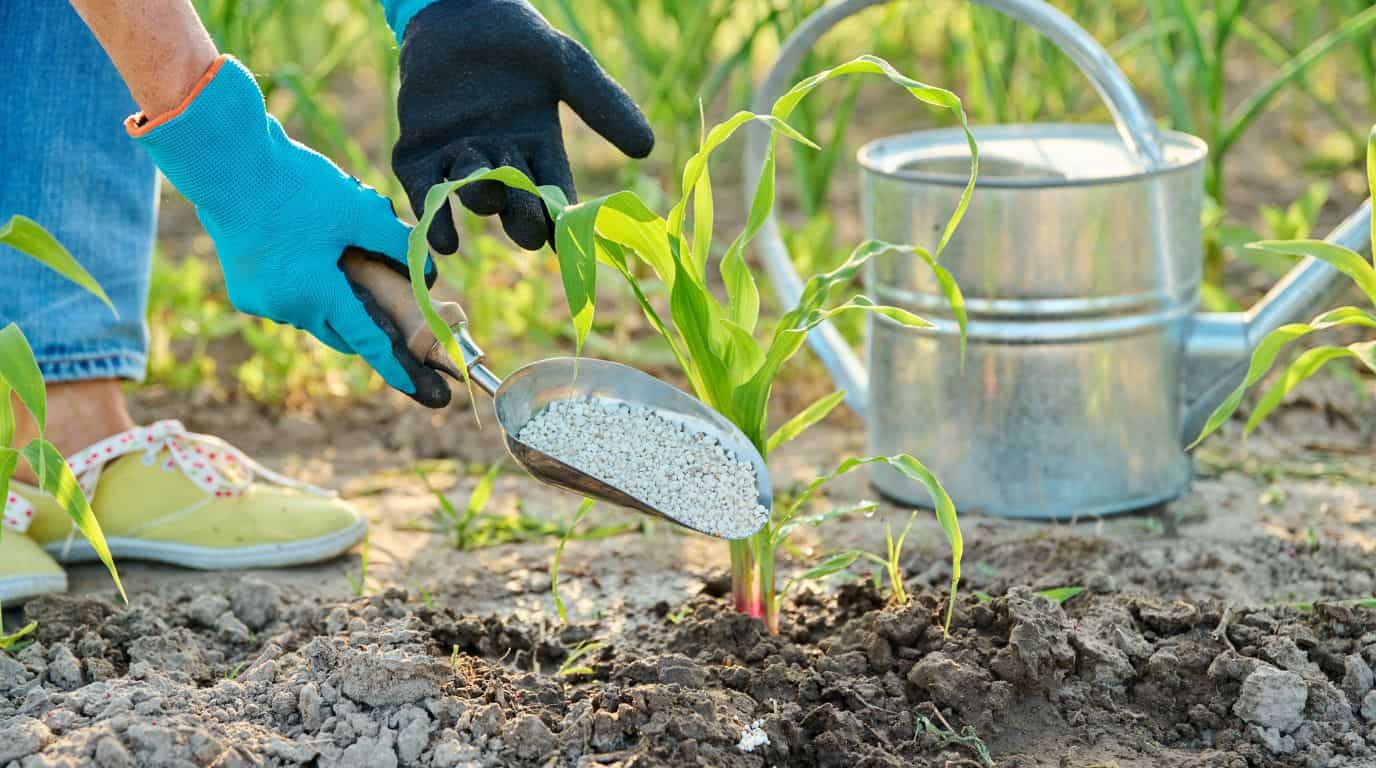
Determine whether you need a product to apply as a base (before or during planting), as a top dressing (during the crop cycle), or through fertigation (dissolved in irrigation water). Solid granular fertilizers are ideal for base or manual top dressing. Powder or liquid products are more suitable for dissolving and applying with irrigation or foliar application. Calculate the dosage based on the soil analysis, crop recommendation, and manufacturer’s instructions, adjusting it to your surface area.
Practical example: annual organic fertilization program for tomato cultivation
To illustrate how to apply these concepts, we present an example of an annual program for organic tomato cultivation in a greenhouse or vegetable garden:
- Autumn (land preparation): Incorporation of 20-30 tons per hectare of well-fermented compost or manure. Sowing a green manure of legumes (vetch or broad beans) to protect the soil during winter and naturally fix nitrogen.
- Late winter: Incorporation (plowing) of the green manure into the soil, about 20-30 days before transplanting, so that its mineralization begins.
- Transplanting (spring): Base application in the planting rows with a mixture of worm humus (2-3 t/ha) and bone meal (300-500 kg/ha) to ensure phosphorus and calcium for rooting and initial flowering.
- Vegetative growth: Biweekly applications of nettle slurry (dilution 1:10) via irrigation, to provide nitrogen and minerals in a balanced way.
- Flowering and fruit set: Foliar or irrigation applications of comfrey slurry (rich in potassium) every 15 days to favor fruit formation and quality. Reinforcement with compost tea application every 3-4 weeks to maintain microbial activity.
- Throughout the cycle: Maintaining a cover of straw or shredded pruning waste (mulching) on the soil surface to conserve moisture, avoid weeds, and provide surface organic matter.
Frequently asked questions about organic agriculture in soil and crop fertilization
Are organic fertilizers less effective than chemical ones?
They are not less effective; they act differently. Their effectiveness is not measured by the immediacy of the effect, but by their ability to build a fertile long-term soil and nourish the plant in a balanced way throughout its cycle. While a chemical can provide a rapid but short-lived response with possible negative effects on the soil, an organic fertilizer provides constant nutrition, improves ecosystem health, and prevents future problems.
Can I achieve the same production with organic fertilization?
Yes, it is possible. Numerous studies and commercial farms demonstrate that, after a transition period in which the soil recovers, yields from organic agriculture can match those from conventional agriculture. The key lies in good management, knowledge of the soil, and the choice of appropriate inputs at each moment. Furthermore, organic production usually has a higher commercial value, which compensates for any possible difference in quantity with greater profitability.
How long does it take to notice the effect of an organic fertilizer?
It depends on the type of fertilizer and soil conditions. Liquid fertilizers (slurries, compost tea) and more soluble meals can show effects in days or a week. Solid fertilizers like compost or manure act more slowly, as they need to be decomposed by microorganisms. Their effects on soil structure and health are visible in the medium and long term (months or even years of continuous management), while nutrient supply occurs gradually.
How do I know if a fertilizer is truly organic and certified?
The only way to be certain is to look on the packaging for the European Union organic production logo (the green leaf with stars) and the code of the control authority that certifies the product (for example, “ES-ECO-001-V” for SOHISCERT). Additionally, the product must explicitly state that it complies with Regulation (EU) 2018/848. If in doubt, you can consult the list of certified operators of the entity appearing on the seal.
Can I mix different types of organic fertilizers?
Yes, it is a common and recommended practice to obtain a complete nutritional profile. For example, you can apply a base fertilizer rich in phosphorus (bone meal) combined with compost, and then make liquid contributions of nettle slurry at key moments. However, it is important to consider possible interactions (for example, compost can adsorb nutrients from a liquid fertilizer if mixed just before applying) and, if in doubt, consult a technician or follow the manufacturer’s recommendations.