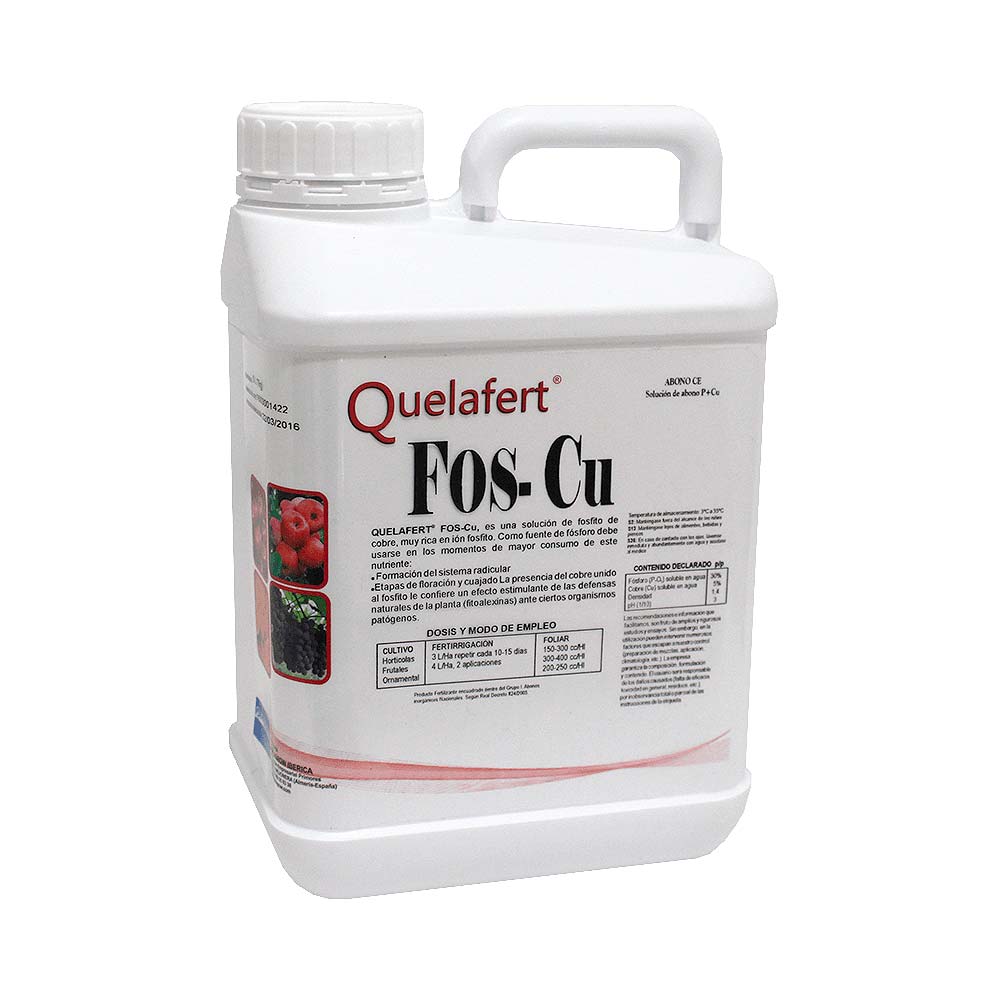
PRODUCT: QUELAFERT® FOS-Cu
PRODUCT TYPE: Phosphite-based fungicide combined with copper
PRODUCT CHARACTERISTICS
QUELAFERT® FOS-Cu is a broad-spectrum fungicide that combines the power of phosphorus in the form of phosphite ion (30% p/v) with the phytosanitary effect of soluble copper (5% p/v). This unique formula acts systemically and locally against oomycete fungi such as downy mildew, protecting the crop from the inside while reinforcing its plant structure. Its action is not only fungicidal but also fungistatic, helping to slow disease progression.
Thanks to its acidic pH (5.5), it can be applied via foliar spray or localized irrigation, adapting to different cropping systems. In addition to combating pathogens, this copper phosphite formulation stimulates the plant’s natural defenses through phytoalexin production and promotes tissue regeneration, strengthening stems and roots. It is an ideal product for integrated disease management strategies and value-added nutrition programs.
COPPER PHOSPHITE FUNGICIDE BENEFITS
The use of QUELAFERT® FOS-Cu provides dual action: on one hand, it protects against fungal pathogens such as downy mildew; on the other, it supplies essential nutrients that reinforce crop metabolism. As a copper phosphite fungicide, its formulation promotes rapid recovery after stress or infection events, improving crop health and yield in a sustainable manner.
Its ability to integrate into different production systems makes it a versatile tool for intensive horticulture, fruit trees, citrus, and ornamentals. Furthermore, by reducing the risk of resistance development, this cupric phosphite formulation ensures effective protection without compromising the balance of the agricultural ecosystem.
FREQUENTLY ASKED QUESTIONS
Does FOS-Cu contain agrochemicals?
Yes, although its composition is within legal limits. FOS-Cu includes active ingredients with phytosanitary effects such as phosphite ion and soluble copper. However, it is an approved product in countries where phosphite use is permitted, without exceeding tolerable levels of heavy metals.
When should I apply FOS-Cu for optimal results?
Application should begin from transplanting or crop emergence. It is recommended to repeat every 21 to 30 days depending on the crop type and fungal pressure level. To maximize its effectiveness as a copper phosphite fungicide, it should be applied directly to the affected area or where there is the highest risk of infection.
Can FOS-Cu be used continuously over time?
Yes, as long as recommended doses are respected. In horticultural crops, up to 6 applications per cycle are permitted, while in fruit trees, citrus, and ornamentals, 2 to 4 applications are recommended. Its formulation as a cupric phosphite product allows periodic use without affecting crop physiology.
Is FOS-Cu compatible with beneficial fauna?
Its use should be carried out with caution. Although formulated to be as gentle as possible, copper can in some cases affect beneficial insects, especially when mixed with other products. It is recommended to assess the presence of beneficial fauna before application of this copper phosphite based product.
Which products should I avoid mixing with FOS-Cu?
It should not be mixed with mineral oils, sulfur, or alkaline-reacting products. Additionally, simultaneous use with other copper-based products should be avoided: it is best to allow at least 15 days between applications. A compatibility test is always recommended before mixing with fertilizers or other crop protection products.