✅ KEY TAKEAWAYS – Best treatment for olive knot
- • What it is: olive knot, also called olive tuberculosis, is caused by the bacterium Pseudomonas savastanoi pv. savastanoi, not a fungus. That’s why no fungicide cures it: what works is protecting the tree before the bacterium gets in.
- • Entry point: the bacterium lives on leaf and twig surfaces without causing symptoms, and only infects when it finds a wound: pruning cuts, shaking or mechanical harvesting, hail or frost.
- • Risk periods: its populations peak in mild, rainy months (spring and fall) and drop in summer, so treatments pay off most in those windows and right after any damage to the tree.
- • Copper as a wound protectant: copper compounds reduce bacterial populations and the number of knots when applied preventively, but they should be used sparingly and rotated to avoid resistance.
- • Our solutions: QUELAFERT® GLUCOBRE, an organically complexed copper that strengthens the olive tree’s natural defenses, and QUELAFERT® FOS-Cu, which combines phosphite and copper with systemic action, both within an integrated prevention program.
- • Sustainable approach: GLUCOBRE is certified for organic farming, and its formulation avoids the phytotoxicity and soil build-up associated with conventional copper.
What is olive knot?
Olive knot is easy to spot by the galls that deform branches and trunks, but the real damage is less obvious: an infected tree gradually loses vigor, yields less and becomes more vulnerable to any other stress. In Spain, the world’s largest olive producer, it ranks in some areas as the third most important olive disease, behind olive leaf spot and another fungal disease known locally as “lepra”. According to a study by the Valencian Institute for Agricultural Research (IVIA), published by the Spanish Ministry of Agriculture (in Spanish), losses in susceptible varieties have been estimated at around 1.3% of total annual production, with local cases of near-total crop loss when weather conditions strongly favor the bacterium, such as a spring hailstorm.
A bacterium, not a fungus: Pseudomonas savastanoi pv. savastanoi
Many growers search for the best fungicide for olive knot, so it’s worth clearing up the biggest source of confusion right away: the causal agent is a gram-negative bacterium, Pseudomonas savastanoi pv. savastanoi, not a fungus. This isn’t an academic detail. It shapes the entire control strategy, because many of the fungicides commonly used in olive groves have no effect on it at all. Something similar happens with potato late blight, caused by an oomycete rather than a true fungus, which also calls for its own approach.
The bacterium follows an epiphytic-pathogenic cycle. First it multiplies on the surface of leaves and twigs without producing symptoms, so a healthy-looking tree can still be carrying it. Only when it finds a way in —a wound, a leaf scar after leaf drop, or even the stomata— does it cross the epidermis and start the infection phase. From there it can move through intercellular spaces and even the xylem vessels, forming new knots at other wounds on the same tree.
Symptoms: knots and galls on branches and trunk
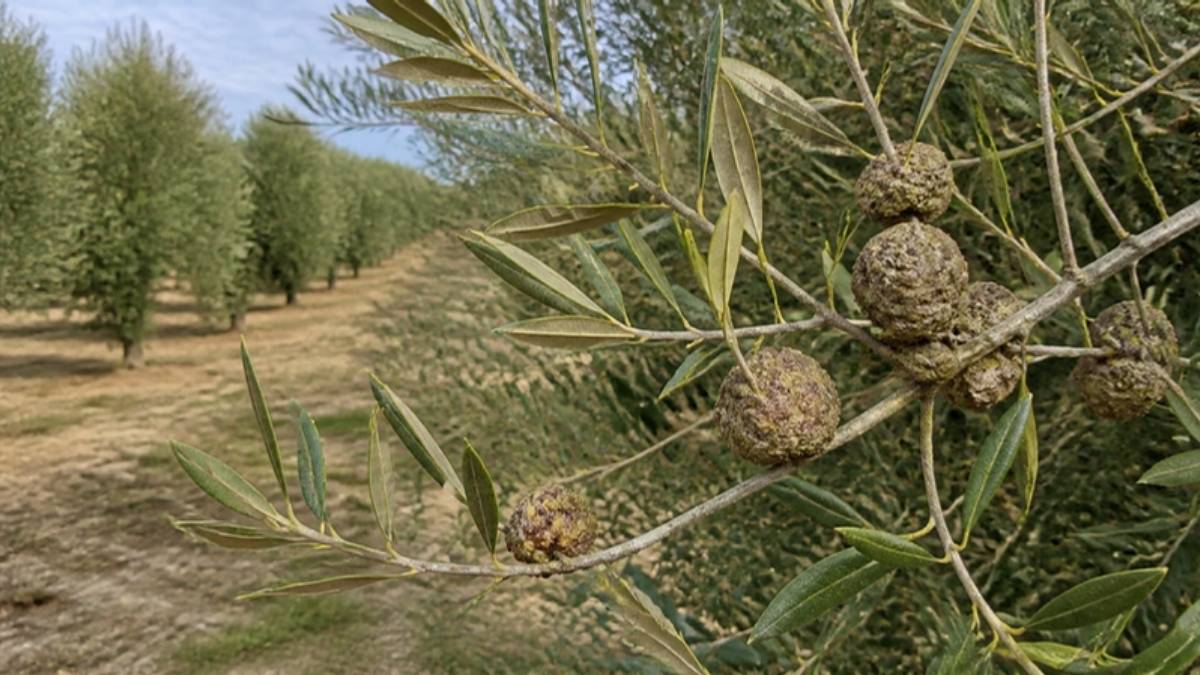
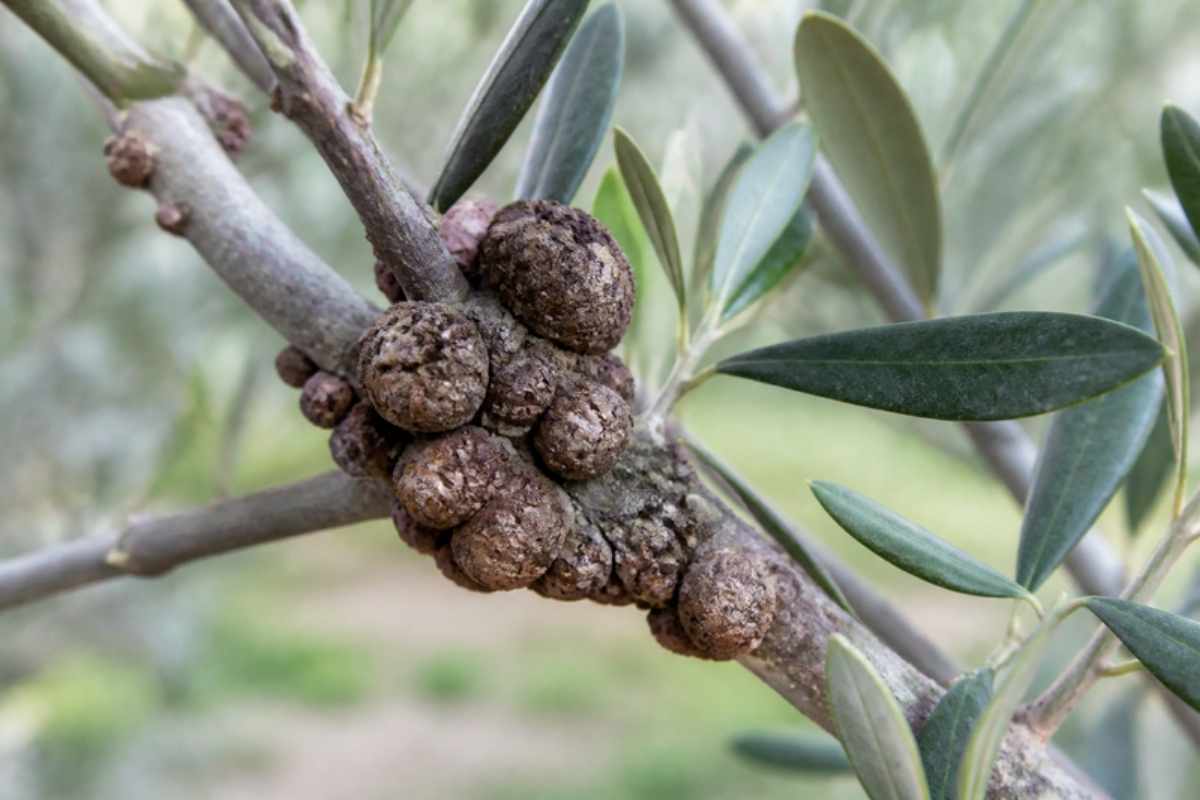
The telltale symptom is the knot, also called a gall or tumor. Early on, knots are rounded and fairly spongy; over time they harden, turn rough and grow from a few millimeters to several centimeters across. They appear mainly on shoots and young branches, and also on stems and trunks; much less frequently on leaves, fruit and roots.
The knot isn’t mechanical damage: the bacterium itself produces the plant hormones indole-3-acetic acid and cytokinins, which trigger uncontrolled tissue growth at the infection site. The knot then becomes a reservoir: the bacterium survives inside it from one season to the next and, when humidity is high, oozes out in exudates loaded with bacterial cells, ready to colonize new tissue.
How it damages the olive grove
According to the RAIF plant health network of the Andalusian Regional Government (in Spanish), knots interfere with water and nutrient transport through the tree, leading to overall decline. The effects reach well beyond the affected branch:
- Reduced vegetative growth, as vascular transport above the knot is partly cut off.
- Lower productivity, in both fruit quantity and quality, with a knock-on effect on oil production.
- Greater susceptibility to other diseases and abiotic stress (drought, cold, heat).
- Weak young plantings, to the point of compromising orchard establishment.
How the bacterium gets in: wounds and risk periods
If one idea sums up the whole olive knot strategy, it’s this: no wound, no infection. The bacterium is latently present in many groves; what decides whether the disease spreads is how many open wounds there are when bacterial populations are high. Within the grove, it’s spread by rain and splashing, wind-borne droplets and contaminated tools; over longer distances, by planting infected nursery stock, with or without visible symptoms.
Pruning, shaking and mechanical harvesting
Orchard operations are the main source of wounds. Every pruning cut is an open door, and shears or a saw that have just passed through a knotted branch carry the bacterium to the next cut. Shaking and mechanical harvesting add scrapes, tears and broken shoots right in the high-risk season. It’s no coincidence that the disease has increased significantly in high-density and super-high-density olive groves, where harvesting is fully mechanized.
Hail and frost
Weather damage is the most dangerous scenario, because it opens hundreds of wounds across the whole canopy at once, usually during wet spells. Spring hail in particular appears in the technical literature as the trigger for the most serious losses. Frost does similar damage by cracking bark and tender tissue.
Fall and spring: when risk peaks
Population studies carried out in Spanish olive groves show that bacterial populations on leaves and twigs are highest in mild, rainy months, especially spring, and significantly lower in summer. The RAIF places its favorable range at moderate temperatures of 10-28 °C (50-82 °F) with high relative humidity. Fall and spring therefore combine the two things the bacterium needs: abundant populations and fresh wounds from harvest or pruning.
Can olive knot be cured?
The short answer is no: an established knot doesn’t go away with any treatment, and the bacteria inside it remain a source of infection as long as it stays on the tree. IVIA researchers put it plainly: olive knot control “must be essentially preventive”. What we can do is sharply reduce the number of new knots and slow the disease’s spread across the grove, by combining sanitation, good cultural practices and well-timed treatments within an integrated bioprotection strategy.
Why treatment is preventive, not curative
Once the bacterium has crossed the epidermis and induced a knot, it’s shielded inside the tissue, out of reach of anything applied to the surface. So the goal of treatment isn’t to “kill olive knot”, but to act on two fronts we can control: reducing the epiphytic bacterial population on leaves and twigs, and protecting wounds while they remain open. Sanitation completes the picture: removing knotted branches by cutting below the affected area reduces the inoculum that feeds new infections.
Copper as a wound protectant
Copper compounds are currently the backbone of chemical control for olive knot, and their preventive effect is backed by field trials. In the IVIA study, Picudo and Arbequina olive trees inoculated with the bacterium and treated with copper oxychloride or copper calcium sulfate —once in spring and once in fall for three years— showed much lower bacterial populations and significantly fewer knots than untreated trees. In Picudo, treated trees ended the final season with 500 to 1,000 knots per treatment, compared with 1,800 on untreated trees.
The practical takeaway is twofold. First, timing is decisive: copper sprays pay off in mild, rainy months, before the bacterium infects susceptible tissue. Second, they should be complemented with wound protection sprays after harvest and after hail or frost events.
Copper resistance: rotate, don’t overuse
Copper works, but it isn’t foolproof. An in vitro study presented at the Expoliva 2015 Scientific-Technical Symposium compared nine compounds against different strains of the bacterium and found that only four inhibited its growth. The same study observed that prolonged exposure to copper compounds appears to trigger a defense mechanism in the bacterium that makes it more resistant.
That’s why we recommend a rational approach: spray at key moments rather than on a fixed calendar, choose efficient copper formulations, and rotate with other tools. Among these alternatives, the RAIF mentions research into natural antagonists such as Bacillus subtilis and Pseudomonas fluorescens, in line with the principles of biological pest control.
Best treatment for olive knot: QUELAFERT® GLUCOBRE and FOS-Cu
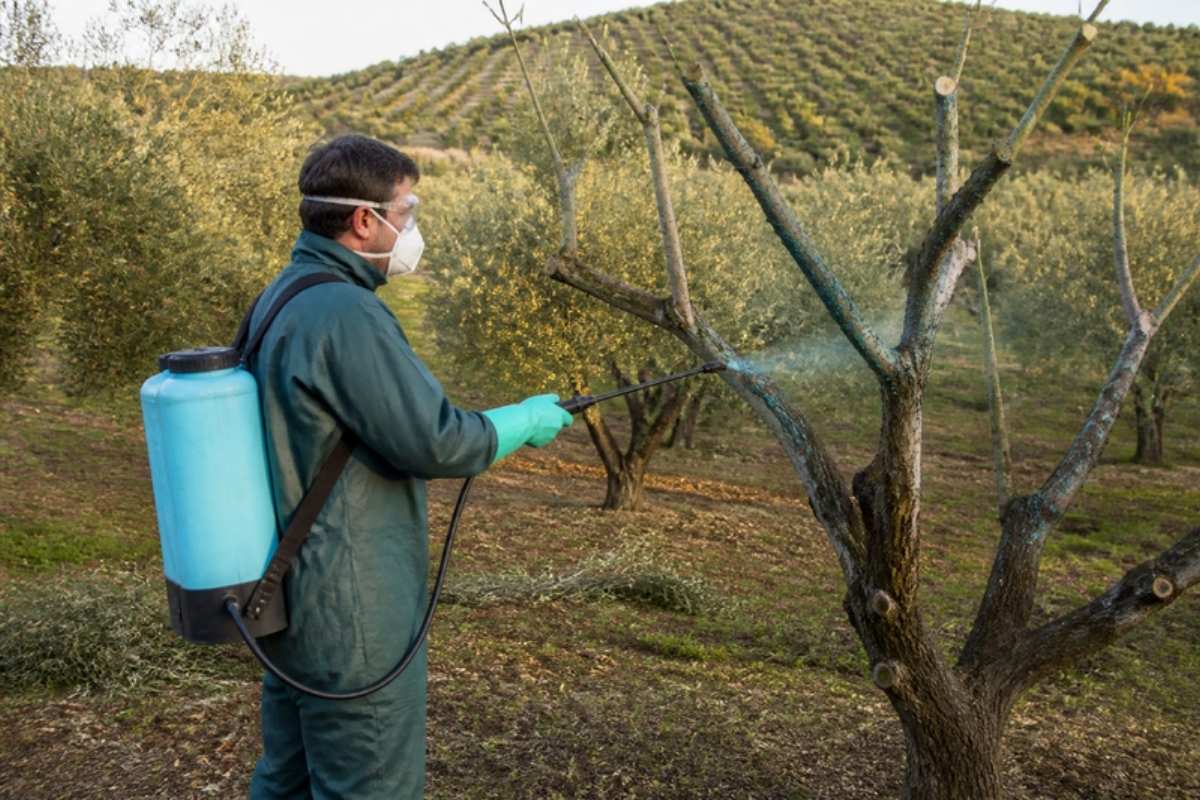
To put this preventive strategy into practice —copper applied at the right time, efficiently and without burdening the soil— at Quelagrow we offer two options from our fungicides range: QUELAFERT® GLUCOBRE and QUELAFERT® FOS-Cu. To be clear about their role: neither cures existing knots, because no product does. Their job is to strengthen the olive tree during high-risk periods, as part of the integrated program described above.
QUELAFERT® GLUCOBRE: organically complexed copper

QUELAFERT® GLUCOBRE is a liquid solution of copper complexed with gluconic acids, reducing sugars and polyhydroxycarboxylic acids. This complexed form allows copper to be absorbed efficiently through both leaves and roots, even under conditions where conventional copper is poorly assimilated. Once absorbed, beyond meeting the plant’s need for this micronutrient, it activates natural defense mechanisms such as phytoalexin synthesis and improves the plant’s response to disease at its most sensitive stages, such as bud break.
It’s a particularly strong fit for growers looking for a more sustainable option: as organically complexed copper, it avoids the phytotoxicity and soil build-up associated with traditional formulations, it’s certified for organic farming, and it’s compatible with beneficial insects and other natural enemies.
How to apply QUELAFERT® GLUCOBRE
In olives we recommend 2 to 3 applications, timed at dormancy, bud break and full vegetative growth, always preventively, before symptoms appear. Reference rates:
- Foliar: 150-300 mL per 100 L of water, with a total of 1.5-3 L/ha.
- Fertigation: 2-3 L/ha.
QUELAFERT® FOS-Cu: copper phosphite with systemic action
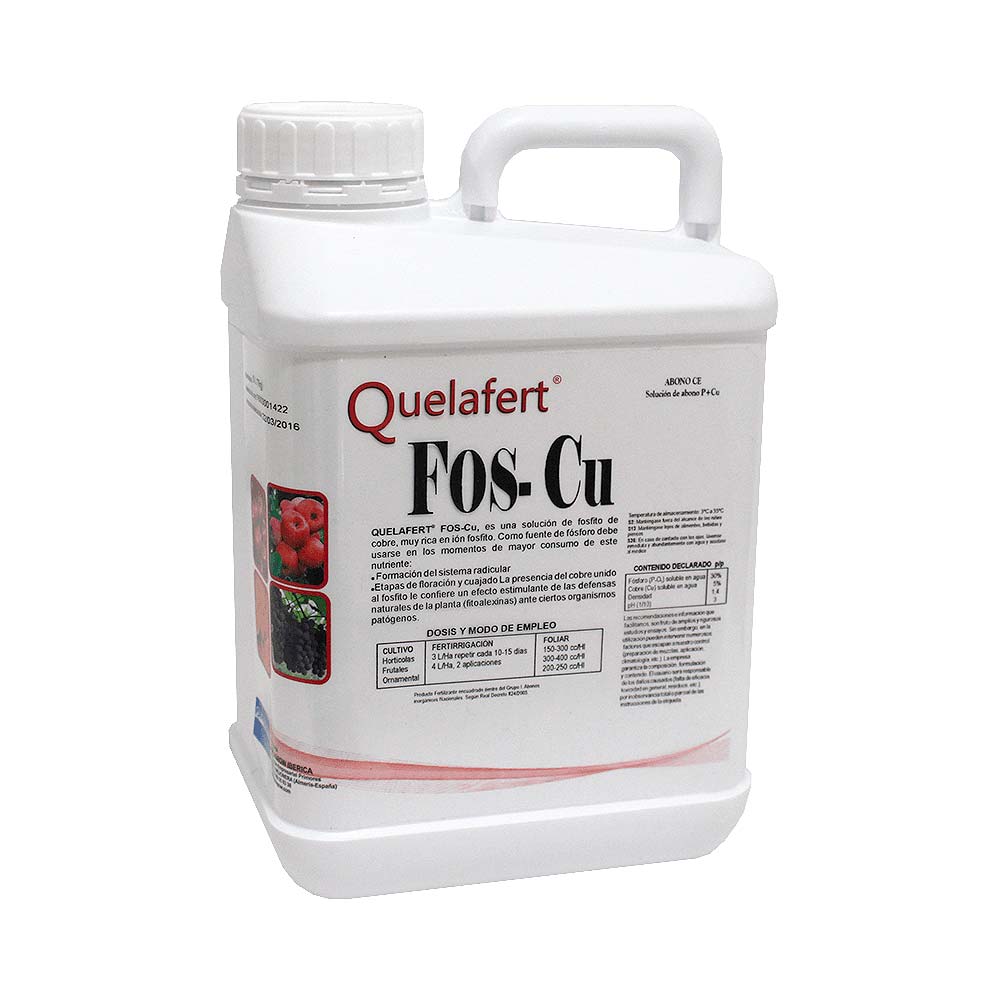
QUELAFERT® FOS-Cu combines phosphorus in the form of phosphite ions with soluble copper. This combination works both systemically and locally: it protects the crop from within, stimulates natural defenses through phytoalexin production and supports tissue regeneration, strengthening stems and roots. Its acidic pH allows foliar application or delivery through drip irrigation, and it fits into integrated disease management programs where adding phosphite’s action to copper is an advantage.
How to apply QUELAFERT® FOS-Cu
Applications start at bud break and are repeated every 21 to 30 days depending on disease pressure, targeting the areas at highest risk of infection; for fruit and citrus trees, the label provides for 2 to 4 applications per season. Since the label doesn’t include a specific rate for olives, we fine-tune it with our technical team for each grove.
How to combine GLUCOBRE and FOS-Cu
Both products supply copper, so they shouldn’t be applied together: leave at least 15 days between one copper application and the next. Neither should be tank-mixed with mineral oils, sulfur or alkaline products, and a compatibility test is always advisable before mixing with other inputs.
Preventing olive knot: best practices
No treatment makes up for management that multiplies wounds or carries the bacterium from tree to tree. These are the practices with the greatest real impact, drawn from RAIF and IVIA recommendations:
- Prune in dry weather and start with healthy trees: avoiding rainy or very humid days limits spread, and leaving knotted trees for last keeps inoculum away from clean trees.
- Disinfect tools between cuts: the RAIF recommends sodium hypochlorite or 70% alcohol, especially after cutting a knotted branch.
- Remove and destroy infected branches: cut below the knotted area and take the material out of the grove, since discarded branches remain a source of inoculum.
- Minimize harvest damage: adjust shakers and machinery to reduce scrapes and tears, especially in high-density and super-high-density plantings.
- Protect after every damaging event: hail, frost or strong winds open wounds across the canopy; a follow-up preventive spray is the most cost-effective measure of the season.
- Plant certified nursery stock: infected young trees are the main way the disease enters new orchards.
Quelagrow: bioprotection for a sustainable olive grove
At Quelagrow we are a fertilizer manufacturer and biocontrol producer with our own production plant in Almería, Spain. Our approach starts from a simple idea: diseases like olive knot aren’t solved with a single miracle product, but with a program that combines nutrition, reinforcement of the plant’s defenses and good practices at the right time. That’s why we develop formulations like GLUCOBRE and FOS-Cu, which keep the effectiveness of proven tools like copper. We work with distributors and large agricultural suppliers to tailor packaging, volumes and private-label options to each market.
Frequently asked questions about the best treatment for olive knot
Does olive knot spread from tree to tree?
Yes. The bacterium spreads with rain and splashing, wind-borne droplets and, above all, pruning tools and harvesting machinery. Over long distances, the main route is planting infected nursery stock, which may show no symptoms at the time of purchase.
Are some olive varieties more susceptible to olive knot?
Yes. In IVIA’s evaluation of 28 varieties, Arbequina, Arróniz, Nevadillo Blanco de Jaén, Pajarero, Picudo and Vallesa were classed as highly susceptible. Low-susceptibility varieties included Frantoio, Manzanilla de Sevilla, Manzanilla Cacereña, Lechín de Granada and Villalonga, while Picual and Koroneiki were moderately susceptible. None of the varieties tested proved resistant.
Can olive knot be managed in organic groves?
Yes. Copper is allowed in organic farming, though with limits designed to prevent build-up in the soil; check the specific restrictions with your organic certifier. That’s why efficient copper formulations certified for organic use, such as QUELAFERT® GLUCOBRE, combined with sanitation and cultural practices, make particular sense.
Is olive knot the same as olive leaf spot?
No. Olive leaf spot (peacock spot) is caused by a fungus and shows up as dark circular spots on the leaves, which eventually drop. Olive knot is caused by a bacterium and produces knots on branches and trunks. What they share is that both are favored by fall and spring moisture, and copper is part of the preventive program for both.
What should I do with pruned branches that have knots?
Remove them from the grove and destroy them. Leaving them on the ground or piled next to the trees keeps an active source of bacteria nearby, since knots hold the inoculum and release it as exudates when it’s humid.
How do I know if the young trees I buy are free of olive knot?
The best guarantee is buying certified nursery stock from a supplier with a sanitary control program that tests for Pseudomonas savastanoi pv. savastanoi. Infected plants can look perfectly healthy, so certification is worth more than a visual check.
Can I use GLUCOBRE and FOS-Cu in the same season?
Yes, but not at the same time. Since both supply copper, space applications at least 15 days apart and don’t mix them with mineral oils, sulfur or alkaline products.