✅ HIGHLIGHTS – Biological control of nematodes
- • What are they? Entomopathogenic nematodes (EPNs) are microscopic worms that act as natural predators of soil-dwelling insect pests.
- • Key distinction: Do not confuse with plant-parasitic nematodes that damage roots. Beneficial nematodes only attack insects.
- • Mode of action: They penetrate the insect, release symbiotic bacteria (Xenorhabdus or Photorhabdus) and eliminate it within 24-48 hours.
- • Pests controlled: White grubs, thrips, caterpillars, fungus gnats, wireworms and many other soil pests.
- • Key advantages: Zero residue, no resistance, compatible with beneficial fauna and suitable for organic farming.
- • QUELAFERT® NEMAX: Our biological nematicide formulated with mitosporic fungi for the control of plant-parasitic nematodes.
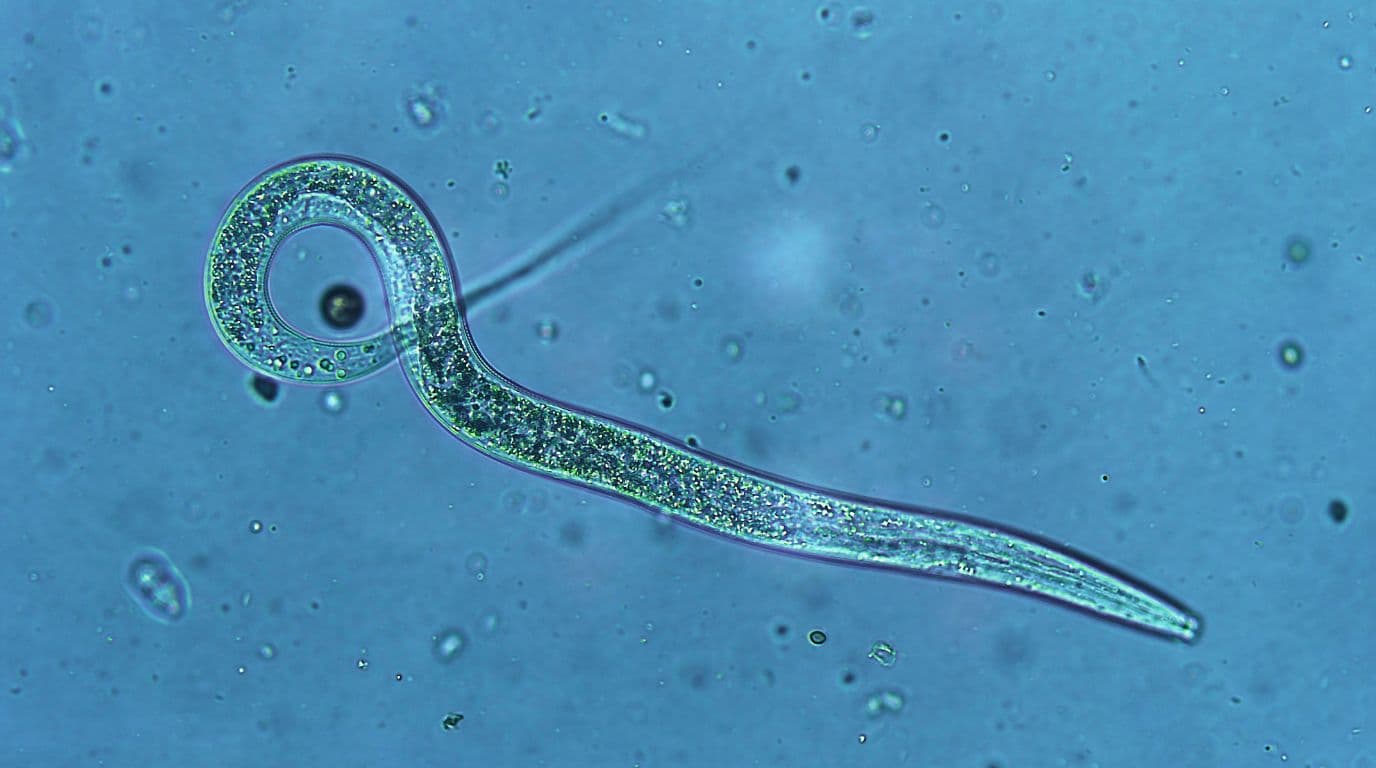
In modern agriculture, the search for sustainable and effective solutions for pest control is a priority. Among the most promising tools are those used for the biological control of nematodes. These microorganisms, often unknown to the general public, are actually valuable allies for the farmer. Far from being the nematodes that damage plant roots (plant-parasitic), entomopathogenic nematodes (EPNs) are natural predators of a wide range of insect pests that live in the soil.
Beneficial nematodes offer a fast-acting biological solution, generate no residues and are compatible with most pesticides, making them a key tool for Integrated Pest Management (IPM). They are living organisms that actively seek out their prey and eliminate them naturally, without the negative side effects of chemical insecticides.
What are beneficial nematodes and how do they differ from harmful ones?
It is essential to start from the beginning and clarify a common confusion. Nematodes are a diverse group of microscopic, non-segmented worms that inhabit soils around the world. There are three main types:
- Saprophytic or free-living nematodes: They are harmless and play an essential role in the decomposition of organic matter, recycling nutrients and enriching soil life.
- Plant-parasitic or harmful nematodes: These are the enemies of farmers. These nematodes feed on plant roots, causing damage such as the formation of galls (Meloidogyne spp.), lesions, or cysts (Globodera spp.). Their attack reduces the plant’s ability to absorb water and nutrients, resulting in weakening, chlorosis and significant yield losses. In crops like tomato, the presence of Meloidogyne incognita and M. javanica is especially devastating, potentially causing losses of up to 60% in protected agriculture.
- Entomopathogenic or beneficial nematodes: These are the protagonists of our article. They are insect parasites and are used as agents of biological control of nematodes and other pests. They are 100% safe for plants, animals and humans, as they can only complete their life cycle inside an insect. Scientific evidence supports that their use is exceptionally safe for the environment, applicators and consumers.
Therefore, when we talk about biological control of nematodes, we are referring exclusively to the third group. They are the “predators” of the microscopic world of the soil, a precision tool for pest management.
Benefits of biological control applying ecological nematicides
The use of beneficial nematodes as ecological agricultural nematicides offers multiple advantages over conventional chemical products. These benefits make them an increasingly attractive option for farmers committed to sustainability:
- Fast-acting biological solution: Nematodes act quickly, eliminating pests in a few days.
- Resistance-proof: Pests cannot develop resistance to nematodes, unlike what happens with chemical insecticides.
- No toxic residues: Nematodes do not leave harmful residues on crops, making them safe for applicators and consumers.
- Compatibility with most pesticides: They can be easily integrated into IPM programs without losing effectiveness.
- Safety for the applicator and consumer: Entomopathogenic nematodes are completely safe for humans, warm-blooded animals and plants.
- Reduction of dependence on chemical pesticides: They help reduce the use of synthetic insecticides, promoting more sustainable practices.
- Increased profitability: Field trials show that biological control with nematodes can increase income per hectare in crops such as wheat, carrot and tomato.
Types of entomopathogenic nematodes: know your allies
Among beneficial nematodes, the most widely used species in agriculture belong to two main genera: Steinernema and Heterorhabditis. Each has particular hunting characteristics and preferences, making them more suitable for controlling certain pests. The choice of nematode species will depend on the pest to be controlled and the environmental conditions of the crop.
Steinernema feltiae
Steinernema feltiae is a beneficial nematode especially effective in greenhouses and protected crops. It is known for its cold tolerance and active search strategy (“cruiser”), which allows it to locate its prey in the soil. It is mainly used for the control of:
- Fungus gnats
- Thrips (in their prepupal and pupal phases in the soil)
- Shore flies and onion flies
Steinernema carpocapsae
Steinernema carpocapsae is a species that stands out for its “ambush” strategy. It remains near the soil surface stalking its prey, making it very effective against pests that move on the surface or in the upper layers of the soil. It is effective against a wide range of pests, including:
- Caterpillars (lepidopterans such as Tuta absoluta, Spodoptera spp.)
- Wireworms (Agriotes spp.)
- Red palm weevil (Rhynchophorus ferrugineus)
- Palm borer (Paysandisia archon)
- Cutworms (Agrotis spp.)
Heterorhabditis bacteriophora
Heterorhabditis bacteriophora is known for its effectiveness against soil-dwelling insects, especially white grubs (beetle larvae). Its hunting strategy is of the “cruiser” type, actively seeking out its prey. It is especially effective for the control of:
- White grubs (Japanese beetles, June beetles)
- Root weevils
- Other coleopteran larvae that damage roots and tubers
Mode of action: how nematodes eliminate pests
The process by which beneficial nematodes eliminate their host is a masterpiece of evolution and is based on their symbiosis with bacteria. Below, we explain the process step by step:
1. Search and location of the host
Nematodes detect their prey through chemical signals (CO₂, heat, specific substances) emitted by the insect. Depending on the species, they can be “active searchers” (S. feltiae, H. bacteriophora) that move through the soil, or “ambushers” (S. carpocapsae) that wait on the surface for a pest to pass by.
2. Penetration into the host
Once the insect is located, the nematode penetrates its body through natural openings such as the mouth, anus or spiracles (respiratory orifices). Some species of Heterorhabditis can also penetrate directly through the insect’s soft cuticle.
3. Release of symbiotic bacteria
This is the key step. Once inside the insect, the nematode releases symbiotic bacteria that it carries in its intestine. Steinernema species release bacteria of the genus Xenorhabdus, while Heterorhabditis release Photorhabdus.
4. Host death and reproduction
The bacteria multiply rapidly and produce toxins that cause fatal septicemia (blood infection) to the insect, which usually dies within 24-48 hours. The bacteria also convert the inside of the insect into a “culture broth” on which the nematodes feed. The nematodes reproduce and feed on this bacterial tissue.
5. Emergence of a new generation
When resources are depleted, thousands of new nematodes emerge from the insect’s carcass, ready to seek new hosts and continue the cycle.
Pests you can control with beneficial nematodes
The versatility of beneficial nematodes allows them to control a wide spectrum of pests, especially those that spend part of their life cycle in the soil.
White grubs (beetles)
White grubs are the larval stage of various beetles. They are creamy white, C-shaped and feed on roots, causing damage to lawns and crops. The most effective species for their control is Heterorhabditis bacteriophora.
Thrips
Thrips are a pest that affects many crops. Nematodes are especially effective against the prepupal and pupal phases found in the soil. The reference species for their control is Steinernema feltiae.
Caterpillars (lepidopterans)
Butterfly and moth caterpillars are voracious pests in many crops. Steinernema feltiae and Steinernema carpocapsae are effective against their larval stages, either in the soil or on the plant surface, if humidity conditions are optimal.
Fungus gnats
These small flies are a common problem in greenhouses and substrate crops. Their larvae feed on organic matter and can damage plant roots. Steinernema feltiae is the species of choice for their control.
Wireworms
Wireworms are the larvae of click beetles and can cause serious damage to roots and tubers. Both Heterorhabditis bacteriophora and Steinernema carpocapsae can be used to control them.
Other soil and surface pests
In addition to the above, beneficial nematodes effectively control shore flies, onion flies, leafhoppers and many other soil pests.
Nematode control in specific crops: cucumber and tomato
Biological control of nematodes is especially relevant in high-value crops such as cucumber and tomato, where plant-parasitic nematodes can cause very significant economic losses.
Nematode control in cucumber
Cucumber cultivation (Cucumis sativus) is of great economic importance in countries like Mexico, where production and export have grown notably in recent years. However, plant-parasitic nematodes, especially the root-knot nematode Meloidogyne incognita, represent one of the main phytosanitary problems.
Characteristic damage in cucumber:
- Formation of galls in the root system (nodules)
- Reduction of water and nutrient absorption capacity
- Slow growth and low crop yield
- Susceptibility to secondary infections by fungi and bacteria
Biological control strategies in cucumber:
- Rhizosphere bacteria: Recent research has shown that bacteria such as Pseudomonas fluorescens, Bacillus vallismortis and Bacillus velezensis have high nematicidal activity against M. incognita, causing 100% mortality in laboratory conditions after 48 hours of exposure.
- Nematophagous fungi: The use of Purpureocillium lilacinum (strain PL11) is effective for nematode control in cucumber, reducing nematode populations by infecting eggs and juveniles. Its application is recommended from transplanting, with intervals of 15 to 20 days.
- Biofumigation with brassicas: The incorporation of broccoli and radish seedlings into the soil has proven to be a promising alternative for managing root-knot nematodes in cucumber.
- Organic amendments and solarization: The combination of these techniques with biological control can significantly improve management effectiveness.
Nematode control in tomato
Tomato (Solanum lycopersicum) is one of the most important horticultural crops worldwide. Root-knot nematodes (Meloidogyne spp.) are considered the most devastating plant-parasitic nematodes for this crop.
Characteristic damage in tomato:
- Root galls: Galls caused by Meloidogyne spp. vary in size depending on the species, with M. incognita and M. javanica producing the largest galls, sometimes covering the entire root system.
- Aerial symptoms: Foliar chlorosis, wilting during hot hours, reduced growth and yield drop. In severe cases, plants may show premature senescence of lower leaves.
- Production losses: Nematodes can cause yield losses of up to 79% in fruit weight and significantly reduce the number of fruits per plant.
Biological control and integrated management strategies in tomato:
- Beneficial fungi: Trichoderma atroviride has shown positive effects in promoting tomato growth and suppressing plant-parasitic nematodes, modulating the plant’s chemical defenses and reducing nematode populations in the soil.
- Biofumigation: The use of biofumigants from the Brassicaceae family, such as cabbage, has demonstrated a significant reduction in root-knot nematode populations in tomato, reaching up to 60.7% control.
- Grafting onto resistant rootstocks: Grafting tomato onto Solanum torvum has proven to be a very effective strategy, reducing nematode density by 93% to 97% compared to non-grafted plants. The combination of grafting with bio-inputs can achieve reductions of over 76% in the population of M. incognita juveniles.
- Essential oils: The application of essential oils from species such as eucalyptus, cinnamon and mint has shown promising results in reducing the number of nematode eggs in tomato roots.
- Entomopathogenic fungi: Metarhizium anisopliae has demonstrated efficacy in controlling tomato pests, and its use as an emulsified formulation can be a viable alternative for integrated management.
QUELAFERT® NEMAX: the best nematicide for biological control
At Quelagrow, we have developed QUELAFERT® NEMAX, a biological nematicide formulated with mitosporic fungi that acts as a powerful antagonist of plant-parasitic nematodes. Unlike entomopathogenic nematodes that parasitize insects, NEMAX is specifically designed for the biological control of nematodes that damage crop roots.

Key benefits of QUELAFERT® NEMAX
- Total control of the pest cycle: Acts on eggs, larvae and adults of nematodes, effectively breaking their reproductive cycle.
- Root system recovery: Promotes soil conditioning and stimulates the generation of new roots, replacing damaged ones.
- 100% biological solution: Being a product based on non-genetically modified microorganisms, it contains no synthetic chemicals.
- Flexibility and total safety: With zero pre-harvest interval, it can be applied at any stage of the crop, from planting to harvest, without generating residues in the harvest.
QUELAFERT® NEMAX is the perfect tool to complement biological nematode control strategies, offering an effective and sustainable solution for farmers seeking to protect their crops without resorting to aggressive chemical nematicides.
Application guide: how, when and where to use nematodes for soil control
To guarantee success in the use of beneficial nematodes, it is essential to follow a series of good practices. Correct application is key to maximizing their effectiveness.
Previous storage
Nematodes are living organisms and must be stored in a refrigerated place (between 2 and 6°C) until the moment of use. They should never be frozen. Once opened, they must be used before the expiry date indicated.
Preparation of the solution
Nematodes are applied in an aqueous suspension. Mix the concentrate with water following the manufacturer’s instructions. The water temperature should be around 15-20°C, and never above 25°C, as high heat kills them quickly. The pH of the water should be between 4 and 8.
Application method
The solution can be applied with conventional spraying equipment (boom, backpack), fertigation systems or drip irrigation. If nozzles are used, pressure should not exceed 20 bar and filters of less than 0.3 mm thickness should be removed to avoid blockages.
Environmental conditions
- Soil moisture: This is the most critical factor. The soil must be moist (not waterlogged) before and after application. Nematodes use the water film to move and survive. If the soil dries out, they die quickly.
- Temperature: Each species has an optimal temperature range. For example, Steinernema carpocapsae is active between 14-34°C, but performs best between 19-31°C. Temperatures below 5°C or above 35°C can be lethal.
- UV radiation: Nematodes are sensitive to ultraviolet light. For foliar applications, it is recommended to do so early in the morning or at dusk, when UV radiation is low.
Monitoring
Nematodes do not act like a chemical knockdown insecticide. Their effect is progressive. The sign of efficacy is the decrease in the pest in the weeks following application. Infected larvae change color (reddish pink in Heterorhabditis, yellowish brown in Steinernema) and can be difficult to find because they degrade quickly.

Compatibility and storage: keys to success
- Compatibility with pesticides: Nematodes are compatible with most chemical pesticides, but it is essential to consult the manufacturer’s compatibility tables. Mixing with copper-containing fungicides and foliar fertilizers in the same tank should be avoided, as they could be toxic to them.
- Storage: As mentioned, cold storage (2-6°C) is crucial to maintain viability until the expiry date. Once the container is opened and the solution prepared, it must be applied in its entirety and cannot be stored, as nematodes settle at the bottom and die from lack of oxygen.
- Sustainability and regulations: Entomopathogenic nematodes are considered natural enemies and therefore do not require phytosanitary registration in most countries. They are a tool 100% compatible with organic farming and zero-residue programs.
Regulatory aspects: legal considerations for the use of nematodes
In general terms, entomopathogenic nematodes are considered natural enemies and do not require a special permit for their application in most countries. Their legal status is different from that of chemical pesticides.
Registration and permits
- In the European Union, nematodes are registered as Plant Protection Products (PPP) under Royal Decree 534/2017, which regulates the commercialization of certain means of phytosanitary defense. This includes biological control organisms (BCOs), so no authorization is needed to apply them.
- In many countries, they are considered biological control organisms (BCOs) and are exempt from the registration requirements of conventional pesticides.
Exceptions and local requirements
Although the general rule is exemption, it is important to note that:
- Some countries require local permits: In certain regions, specific permits may be required or local regulations must be complied with, especially for the introduction of non-native species.
Compatibility with organic farming
Nematodes are compatible with organic farming. In the European Union they are considered microorganisms and their use is authorized in organic production. In the United States and Canada, products such as Entonem and Capsanem are included in the OMRI list.
Frequently asked questions about biological control of nematodes
Are beneficial nematodes safe for humans and pets?
Yes, they are completely safe. These nematodes only parasitize insects and cannot survive or complete their life cycle in warm-blooded organisms (mammals, birds) or in plants.
How long do nematodes take to take effect?
Under ideal conditions, they can kill an insect in 24-48 hours. However, the effect on the pest is observed progressively over a period of 1 to 2 weeks, as nematodes must find their hosts.
Can I apply nematodes in any type of soil?
They are not suitable for all substrates. In very inert substrates, such as rock wool, they do not survive well and are lost through drainage. They are more effective in soils with organic content that provide them with moisture and porosity to move. In very clay soils, they can be less effective, so repeat applications are recommended.
Can I use nematodes together with other insecticides?
In general, yes, but with caution. It is crucial to consult the manufacturer’s side effects table to ensure that the chemical product is not toxic to nematodes. As a general rule, direct tank mixing with copper-based fungicides or foliar fertilizers should be avoided.
Can nematodes overwinter in my soil to control the pest the following year?
In temperate climates, the probability is very low. Entomopathogenic nematodes do not survive very low temperatures and, to overwinter, they would need to be inside a host. Although it could occur, the number of surviving nematodes would not be sufficient to effectively control a pest in the following season.